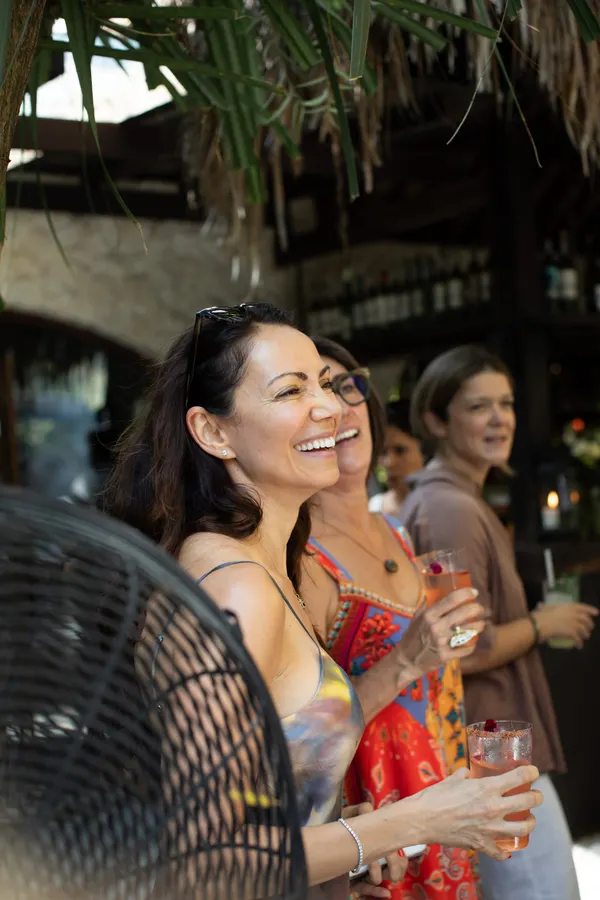
I walked into Bar Vera one night. Tucked inside Further Hotel, this terracotta building on Jl. Pantai Pererenan. My friend told me there's a rooftop pool on top (Portion, they call it), with panoramic views of sacred temples and pitched roofs. Bar Vera sits on the ground floor, right next to the road, and stepping inside felt like entering a whole new world: this glamorous, amber-lit bar front, so different from the street side of Pererenan just outside.
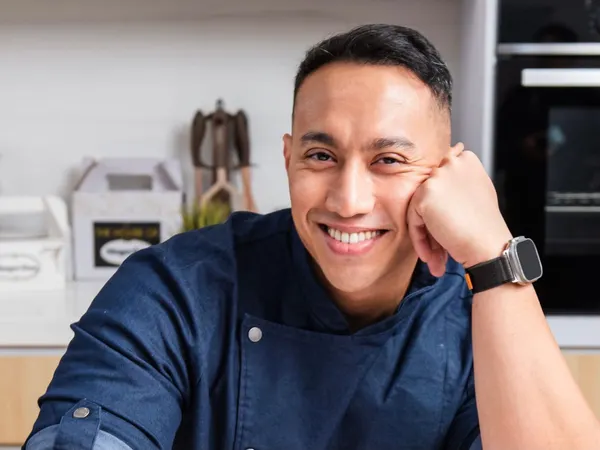
Then I saw Benji, with his laptop open on the side of Bar Vera, welcoming me with a big hug and a smile.
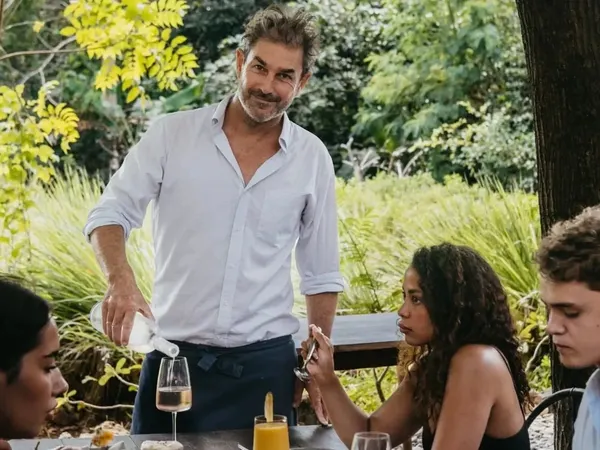
He was a quiet guy, but the more we got into conversation (with cocktail and ice cold water the waiter kept refilling), the more he opened up. We sipped on the Dirty from Bar Vera's aperitivo menu, made with wagyu fat-washed gin, vermouth, sherry, and smoked bamboo. One of the most unique cocktails I've ever tasted in my life, served with olives and pickled cocktail onion, paired with duck salami with szechuan pepper and plum puree from their small plates menu. The kind of pairing that makes you keep taking sips as the conversation gets deeper.
Here's a guy who co-owns Masonry Canggu, Masonry Uluwatu, Bar Vera, Chop House, Backroom, and does the entire food production for Aqua Blu Expeditions (a luxury ship that sails from Bali to Komodo to the Spice Islands to Raja Ampat), and he just opened Masonry Japan, a ski-in, ski-out restaurant in Niseko, Hokkaido. And when I asked him what drives all of it, his answer wasn't empire-building or ambition or any of the usual entrepreneur buzzwords. It was this: "I like design and concept."
And then, later, he said the thing I kept thinking about long after we finished talking. He was explaining how he builds his restaurants, and he said it so matter-of-factly, like it was the most obvious thing in the world: "When we design, we make everything from scratch. All the furniture is designed from scratch. Everything. We build the venues generally from scratch."
Not just the menus. Not just the recipes. The furniture. The bricks. The layout, the concept, the plates, the charcuterie, the cheese. All of it, made by hand. I looked around Bar Vera, this hand-made terracotta room we were sitting in, and it clicked. That's the thread that connects every single thing Benji Cross has built over the last two decades.
This is his story.
A cook, not a chef
Benji (real name Benjamin Cross) is originally from Eltham, a small village outside Melbourne. He started his career at Rae's on Wategos in Byron Bay, one of Australia's most acclaimed restaurants. He was around 16 or 17 when he knew hospitality was it. "As soon as I finished school, then straight into apprenticeship to learn cooking."
Except he never actually finished. "I used to skip school a lot. So I never finished my... Technically, I'm a cook, not a chef. I never got my papers."
He says he was a terrible student in the classic sense, the school, the college. "Because I thought I knew it all and I didn't like to go." But in the restaurant kitchens? Different story. "I was very good. I always wanted to do everything. There was a push for perfection at that age."
That push led him to some of Australia's most respected kitchens. He worked under Neil Perry at Rockpool Group when it was on the World's 50 Best list, a chef he still calls "one of the key people to shape Australia's food scene." He worked with Janni Kyritsis from the former MG Garage, was part of the re-opening team of XO, and worked as Sous Chef at Rockpool. "The mentors are a super important part of the development," he told me.
And then there was travel.
Spain, Julian Lennon, and falling into it
When Benji was 21, he moved to Spain. Not to open a restaurant, just to live. But he needed money, and some people approached him, and eventually he agreed. He ended up opening a restaurant in Mallorca. His business partner? A guy named Julian Lennon.
"Julian Lennon, who is John Lennon's son in The Beatles. Which I didn't realize at the time. It took me a while to catch on who they're talking about."
They'd met by chance at a BBQ. Benji ran the restaurant with him for two or three years, then stepped away because he wanted to learn more. "So I moved back to Sydney and then went back to Rockpool Group. And did some more working and learning and experience."
I think that says a lot about how Benji operates. Most people, at 23 or 24, having just run a restaurant in Mallorca with a Lennon, they'd ride that wave. Benji went back to being a student. He also did stagiaire stints, unpaid internships, in restaurants around the world, just to absorb how other chefs worked. New York, Barcelona, everywhere. One memorable stop was Tertulia in New York's West Village, a wood-fired concept that stuck with him. Another was Can Fabes, a three-Michelin-star restaurant north of Barcelona that was at the vanguard of Catalan cuisine for three decades. "A guy would come in from mushroom picking in the mountains and drop his produce off. Another guy would come in with a just-killed chicken still with its feathers on," he's said about the experience. "And it was amazing to be in such a beautiful restaurant that was a mix of old and modern."
19 years on the island
In 2008, Benji moved to Bali to work at Ku De Ta. He's been in Indonesia ever since, 19 years now. From Ku De Ta, he opened his first business with some friends: Hank's Pizza and Liquor in Seminyak. "It was a really cool little pizza cocktail bar, rock and roll kind of dive bar."
Then came Fishbone Local in Canggu, a seafood cafe and restaurant that closed during COVID. Then Masonry. Then Masonry Uluwatu. Then Backroom, which is a bar and club. "It's Chop House right now, but now Backroom's having a bit of a resurgence. We're doing some big parties. Last night was a huge one, which is kind of cool, getting a really nice crowd coming through."
Then Bar Vera, the neo-Parisian bistro and wine bar. Then Chop House, the steakhouse. Then Aqua Expeditions. Then Masonry Japan.
Eight restaurants in his lifetime, if you're counting. But the number doesn't capture what makes Benji's approach different from most people building hospitality businesses in Bali. It's all in how he builds them.
The craft of Masonry
There's a reason the brand recently evolved from MASON to MASONRY: it's a nod to the craft itself. Handwork, care, attention to detail, things built from the ground up. And that's not just branding. It's literally how the restaurants operate.
At Masonry, they make their own charcuterie. They make their own cheese. The halloumi is house-made. The plates were custom made. Even during the construction of the original Masonry Canggu, a lot of the bricks were custom made. "There's a nakedness to this style of food," Benji has said, "because there's nothing to hide behind. It has to be good."
His co-founder at Brett Hospitality Group is Dom Brett, who studied Business and Law, trained as a chef in Brisbane and Sydney, then pivoted to operations, opening 10-plus venues around Australia with the Keystone Group before relocating to Bali to launch The Lawn Beach Club in Canggu. Together with Marcus Boyle as Group GM and Head Sommelier (a certified Court of Master Sommeliers member originally from Melbourne), they've built a team that takes the same from-scratch philosophy across every venue.
When I asked Benji what part he loves the most about creating a restaurant, he didn't hesitate. "Design and concept." He told me that when they build a venue, they do the design, the layout, the concept, working with the architect or interior designer. He pushes his cooking passion into building concepts and ideas now. "I don't do a lot of cooking now because I just do menu design and things like that."
And that tracks with his official title across the group: Co-Founder and Culinary Director. Not Executive Chef. Not Head Chef. The guy who shapes what each place is, not just what it serves.
Three children, no favourite
I asked Benji to break down the differences between his Bali restaurants, and he laid it out cleanly.
Masonry is Mediterranean, wood fire, casual but still a little bit elevated. "It's not like fast food for sure. And they're large venues, busy, noisy, fun."
Bar Vera is a French bistro version of that. "Neo-Parisian bistro which is kind of a modern take slash wine bar. It's a little bit more elevated, smaller."
Chop House is more of a steakhouse.
Backroom is designed for parties. "We don't have a fixed party anymore. But if there's good talent, we'll work with that talent and throw the parties."
I asked him if he had a favourite. "You can't pick a favourite child," he said. "Even if you prefer one moment, but then tomorrow it will be the other one." They all have elements he wants to change or improve. It changes day by day.
From Canggu to Hokkaido
End of last year, Benji opened Masonry Japan, a ski-in, ski-out restaurant inside Niseko Kyo, a luxury condo hotel in Upper Hirafu, Hokkaido. The space was designed by Vyvial & Co., seats 60, and is led on the ground by Head Chef Tom Jack, whose background includes Shobosho in Adelaide and honto in Brisbane.
It's a seasonal restaurant, only open four to five months through the winter. And it's not a copy-paste of Masonry Bali. "No, it's a hybrid concept. We adjusted it to the market in Japan."
In Niseko, it's more of a tasting menu or set menu format. But within that, there's still the Masonry DNA: one of the courses is all sharing style: the Mason hummus with crispy bits, house-made charcuterie, a set of pickles and dips. "It's very in line with what Masonry Canggu and Uluwatu is."
But the rest goes deeper into Hokkaido. "Which is also probably the best seafood you can get in the world," Benji told me. They buy milk off local farmers and make their own halloumi with Hokkaido dairy, some of the best in the world, he said. The Wagyu beef is local. The menu features Okhotsk chicken seared over Japanese Binchotan charcoal, and Furano Wagyu striploin with yuzu kosho, cabbage slaw, and sweet and sour shallots. The wine list is curated by Marcus Boyle.
"For me, Masonry Japan had to feel like Masonry Bali, but also belong to Niseko," Benji has said. "We really wanted to create a sense of ownership for the local community, so it feels like it's their own, a place they're proud to bring people to."
That philosophy (the local community owning the restaurant) is something he kept coming back to in our conversation.
It's also his first business in Japan. "It's hard, challenging. But it's just a learning curve. Understanding how the Japanese work. It's all about building relationships and trust. Once you have that then you can do business with them. But you can't bypass that. So it takes time to be able to get things going."
Benji, by the way, is also a snowboarder. He tries to spend at least one month on the mountain each year, across two to three different parts of Japan. He first discovered Niseko through a collaboration with Mandala Club Bali. And his first stop when he lands in Japan? "A full Family Mart degustation."
A moving restaurant
Then there's Aqua Expeditions, or as Benji put it, "a moving restaurant." Aqua Blu is an ex-British navy ship from the 1960s that got converted into a superyacht. It sails through Indonesia: Bali to Komodo during the dry season, then to the Spice Islands and up to Raja Ampat as the rainy season comes through, and back down to Bali at the end.
Benji and his team do the food production for the ship, cooking for up to 30 guests on board. They have a production kitchen behind Masonry, and they send the food by air freight to wherever the boat is. "We try and buy as much as we can locally in each area, but the areas are quite limited in what you can get there."
The challenges are constant. "It's all about logistics. You're also cooking like... It can sometimes be rough seas. And then you have supply challenges. And sometimes the plane might not fly going to places like Sorong in West Papua. So then they might not get all the food that they're supposed to get. So then you have to be very flexible. But still deliver a very high end experience."
When something goes wrong on the boat, the team messages Benji. And he said something interesting about that: "It's sometimes easier for me. Because I'm not there. So I can think a little bit out of the box. And go... What have you got? Let's create this with that ingredient. Send the guys recipes. Make this."
The operation started in late 2019. It ran for only a few months before COVID shut everything down. Now, six years later, he says it's pretty good. "I'm trying," he laughed when I asked if he'd mastered it.
Never in Australia
For someone originally from Melbourne who's built eight restaurants across Indonesia, Spain, and Japan, there's one country conspicuously absent from the list.
"Never," he said when I asked about Australia. "Because I left Australia when I was 21."
He thinks the business model there is just too difficult. "Everything is too expensive. A lot of restaurants they open and then they have to close. Because it just doesn't work. The rents are going up. Salaries are going up. The cost of goods are going up. But you can't keep charging more for the products."
He acknowledged that some people do it really well in Australia, but they've been working at it for 10 to 20 years. "Whereas me, I've been overseas that whole time. So for me to go back and try and do it, I think it's too difficult."
He sees a brighter picture in Southeast Asia. "All those cities are now evolving. Their food is evolving. Which it wasn't maybe 10 years ago. It was quite stagnant. Whereas now there's a lot of Indonesian chefs. Some of them have gone abroad and worked. And then they're coming back with amazing skills and ideas. And incorporating it into local produce. Sometimes local recipes and things like that. It's pretty cool."
But he was quick to push back on the idea that building in Indonesia is easy. "For me it's easier. Because I know Indonesia. For the average person if they just fly or move to Indonesia, I think it's very difficult. You really need to understand Indonesia."
"I think a lot of people think they can just move here and open a place. And it's easy. And it's not easy. It's anything but easy. It can be done but it takes a lot of time and effort. And you really need to consider the culture, the people and everything. You can't just walk in and be like, I don't care, I don't like this and I'm going to open this. It will never work like that."
What makes or breaks a restaurant in Bali
This is where the conversation got really interesting. I asked Benji what makes or breaks a restaurant in Bali, and his answer was sharp.
"I think you need to go into an area that doesn't have something that you want to offer. Whereas a lot of people now they find a restaurant that's busy. Maybe like Masonry or something. They go, wow that place is busy. So they take the exact concept and open it down the road. And it's like, wow you can try but you're just going to be fighting for business."
"It's always looking at what's missing in the market and add something good to the market. Rather than copying something that's busy and then trying to steal from their market share."
And who does this the most? "Generally it's never people who have been here a long time. It's people who have just moved to Bali and are like, oh we're going to open a restaurant. That looks busy, let's just do that."
But the biggest piece of advice he gave, the one that felt like it came from the deepest place, was about community.
"When you open in an area in the beginning, always target the local crowd within the community. Whether that's local, expat or whatever. The people who live here. Also Jakarta, Surabaya is the first target. You give ownership of the restaurant to the community. It's their local little restaurant that they go and hang out at. And then the tourists will come after."
"But a lot of people target the tourists and forget about the local community. And then no one cares about it. The thing that makes a restaurant busy is the local community will promote it to every person that comes. To their friends and friends of friends. It's like, yeah you have to go eat at this place. And they become proud of it. It's like, yeah I've got this great little place down the road from my place."
"And I think that's probably the key when opening. Don't target tourists, target local community first."
Doing the one thing
I mentioned to Benji that Masonry in particular doesn't do a lot of gimmicks: no big promotions, no flashy campaigns. But consistently, people go there for date nights, dinners with friends, over and over. And his explanation was beautifully simple.
"The concept of that is we try to make something that's always the same. We don't change it too much. Because if someone wants something else, we're totally fine. It's like go to this other restaurant. Because there's some great restaurants down the road, across the road. But when you feel like eating Masonry food, then come and eat it."
"We don't try to do everything. We just try to do the one thing. So when you feel like it, everyone knows where to go."
And about the staff, because I had to bring it up, having been to Masonry myself. They're genuinely warm and welcoming. The kind of staff that remembers your name. "They're amazing like that. It's genuine hospitality. That's one of the beautiful traits of Bali."
And in a neighbourhood like Batu Bolong (where every business is fighting for attention and there's a lot of noise), Masonry's approach is to just keep their head down. "We concentrate on what we do. Not so much what other people are doing."
What's next
Next up, Benji is eyeing large-scale catering: wedding format, 180 people, the works. They already do some of it, but he thinks it's an area where they can push more. The challenge, as always with Benji, is logistical and hands-on.
"The weddings are never in a place set or designed for doing good food. So, that's the challenge: how do you still produce high-quality food in generally it's in a backyard in a beautiful villa with just some takeaway tables. How do you cook for 180 people when you don't have an oven. Where do you put the plate when there's no tables for the kitchen. And it's everyone eating at once, it's not like a restaurant where it's 10 people, 4 people, 3 people, it's like 180 people now."
The existing venues will keep evolving too. Masonry Canggu is coming up on 10 years. "So then we start to look like, okay, it's 10 years now, should we evolve it? Should we renovate? Should we do something?"
And retirement? "I love the idea of retiring, but I think it'd be pretty boring."
By the time we finished talking, the Dirty was long gone and Bar Vera had filled up around us. I looked around one more time at the hand-made terracotta walls, the amber lighting, the custom furnishings, and thought about something. Further Hotel, the building we'd been sitting inside all night, was built with hand-made brick facades. Every brick, shaped by hand. And here was Benji, sitting inside it, a guy who custom-made the bricks for his own restaurant too. A guy who makes his own cheese, cures his own charcuterie, designs his own furniture, and builds his venues from the ground up.
It made sense that he'd landed here, inside a building that was built the same way he builds everything else.
"I saw it more as a fun thing to do rather than work," he once said about cooking.
Almost three decades and eight restaurants later, you get the feeling that's still true. It's just that "cooking" now means building entire worlds from scratch. And as long as there's something left to build, Benji Cross probably isn't going anywhere.
Frequently Asked Questions
Who owns Masonry Canggu and Masonry Uluwatu in Bali?
Masonry is co-founded by Benji Cross and Dom Brett under the Brett Hospitality Group. The group also operates Bar Vera, Chop House, and Backroom, with Marcus Boyle serving as Group GM and Head Sommelier.
What is Masonry Japan in Niseko, and when is it open?
Masonry Japan is a seasonal restaurant inside Niseko Kyo in Upper Hirafu, Hokkaido, open roughly four to five months during winter. It offers a tasting-menu format using local Hokkaido produce — including house-made halloumi from local dairy and Furano Wagyu — while keeping Masonry's signature sharing-style courses.
What is Bar Vera at Further Hotel in Pererenan?
Bar Vera is a neo-Parisian bistro and wine bar on the ground floor of Further Hotel on Jl. Pantai Pererenan. It's part of the Brett Hospitality Group and is known for inventive cocktails and elevated small plates.
What advice does Benji Cross give for opening a restaurant in Bali?
Benji stresses filling a gap in the market rather than copying a busy concept nearby. He also emphasises targeting the local community first — residents, expats, and domestic visitors — rather than tourists, so the neighbourhood takes ownership of the restaurant and promotes it organically.
What is Aqua Expeditions and how is Benji Cross involved?
Aqua Expeditions operates Aqua Blu, a converted 1960s British navy ship sailing routes from Bali to Komodo, the Spice Islands, and Raja Ampat. Benji's team handles all food production from a kitchen behind Masonry, sending provisions by air freight to the ship wherever it's docked.