I'll be honest. When I first walked into CURE, I was ready to be disappointed. The restaurant sits in what I think is the most premium spot in Canggu, right in front of Batu Bolong beach, conjoined with the Regent Hotel. The entrance alone was intimidating enough for me to write the whole thing off before sitting down. I was bracing for the usual: fusion food, mediocre dishes branded as high-end gourmet that you're not supposed to criticize, and on top of that, expensive.
I was completely wrong.
CURE originally ran for 10 years in Singapore, where it earned a Michelin star. But the rents became brutal for an independent restaurateur, and Walsh decided not to retire the brand but to give it what he calls "a new lease of life." CURE 2.0, here in Bali. The name comes from the Latin curare: to take care of people. That's the whole philosophy.
I genuinely think it's been a long time since a dining experience left me this shook. Every dish was light but punchy, savory but sweet, crunchy but soft, all at the same time. Every plate had a completely different flavour profile with its own complexity baked in. I was food-flabbergasted at every course. And the bites and small plates start at 55K to 100K IDR. I walked in expecting to pay at least double.
Cocktails and a date for two
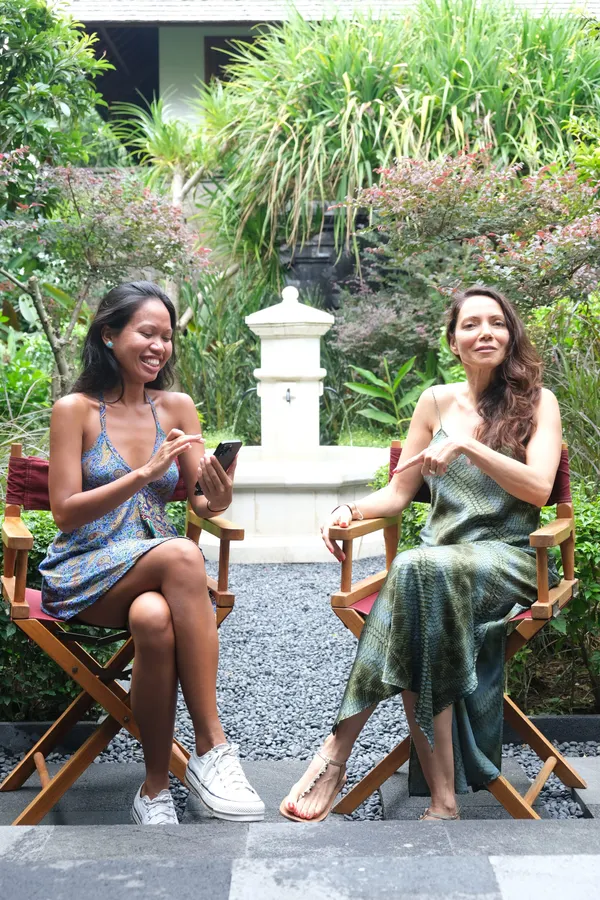
The dinner was intimate. Just the two of us with Pipi from the Regent, which honestly felt like I was on a date. Daniele, the general manager, recommended cocktails to start. I went with the Cassava Cloud: purple cassava-infused vodka, ginger, lemon, cheese foam, and a cheese tuile. He said it's their most popular. Pipi chose the Cafe Coco: coconut rum, cold brew, Kintamani orange, kaffir lime leaf, and coffee hydrosol which was Daniele's personal favourite.
Then Chef Andrew came out. Not a runner, not a waiter. The chef and owner himself, carrying three bites to the table: pork belly doughnut with char siu and cucumber, wagyu beef tartare with polenta and gentleman's relish, and prawn toast with miso and chives. He told us to start with the prawn toast, then the tartare, then the doughnut. Lighter to heavier. The prawn toast, he described as a savory French toast with parmesan custard, a honey vinaigrette, onion jam, and a touch of fresh honey.
An Indonesian donut-inspired potato bread
For the second course, Chef Arvin Tjandra took over. He's CURE's Chef de Cuisine, working closely with Walsh to develop the menu and refine every detail behind each plate. What makes his story interesting is that Arvin never came from a hospitality or culinary school background. His journey started purely from a deep passion for food and cooking, built through years of discipline, curiosity, and exploration. You can feel that in the way he talks about his dishes, there's a genuine excitement.
He brought out bluefin tuna tartare with kaffir lime leaf and tomato jelly, alongside the signature potato bread with creme fraiche butter and salmon roe.
The potato bread, Arvin explained, is inspired by the Indonesian potato donut. Its crust is made with brown sugar, so it leans slightly sweet, but then the crème fraîche butter brings acidity, the salmon roe and bacon bring salt. Sweet meets sour meets salty. As for the bluefin tuna, it's mixed with yuzu, topped with a kaffir lime leaf emulsion, then finished with a jelly made from a base of tomato, lemongrass, turmeric, and ginger (essentially a kuah kuning). He told us to eat it top to bottom with the lettuce so you get every texture in one bite.
Walsh had described this dish to me earlier. "If you look at it top down, it's just this very artistic ring of jelly," he said. "But underneath: layers of fresh tuna, a little filo crisp for texture that you don't even know is there, and the kaffir lime emulsion with this really punchy, zesty flavour." Simple but complex. Those were his exact words, and they kept proving themselves right through every course.
The duck, the rice, the sambal
Then the mains. Chef Arvin served three plates: roasted aged duck with beetroot ketchup and black sambal, Japanese rice with chicken skin and egg yolk jam, and a green salad with garden herbs and house vinaigrette.
The duck was aged 12 days and grilled, with the leg done as a confit. The skin was crispy, the fat rendered and savory, and then you hit the black sambal. It's like a marriage between sambal hitam Madura and rendang sauce somehow. Deep, warm, intense. On the other side, the beetroot ketchup: bright and European. Walsh told me earlier that this contrast is exactly the point: "It's merging those identities. European with a lot of Asian flavours."
And the rice. Arvin introduced it almost apologetically.
"Karena kita orang Indonesia, harus makan nasi."
Because we're Indonesian, we have to eat rice. But this was chicken rice cooked in a flavoured stock with lemongrass and ginger, topped with puffed rice and crispy chicken skin for texture, and egg yolks cooked down slow like a jam for umami. He told us to mix everything together before eating. The result was buttery and layered, the chicken skin mimicking that skillet-fried crispy rice texture. The salad on the side was there to clean everything up. Nobody needed convincing to finish the plate.
Dessert beyond sweets
At this point we were both completely full. My cocktail was long gone and Pipi told me to order another one for dessert. I went with the Tirtha: arak, calamansi, tirtha cordial, quinine, carbonated. And it was perfect on a full stomach. Refreshing and light, dangerous.
Then dessert: Thai tea with toasted rice and soy caramel. The soy caramel brought a savory depth that kept it from being just another sweet course. Deep instead of overwhelming. A comforting ending to a loud meal.
More than the food
But beyond the food, the whole experience felt multidimensional. The completely open kitchen lets you watch the team work. Occasionally you'd see Chef Andrew hosting tables, checking in, asking how everything was. It was fine dining and luxurious, yes. But also intimate, caring, and honest.
Walsh told me he looks at cooking like being a musician who plays many instruments rather than just one. "If I can make a paella, I can make a risotto. If I can make a risotto, I can make a congee." That range shows up in every plate at Cure: European technique, Asian soul, Indonesian heart.
I still think about the bluefin tuna tartare. The wagyu beef tartare with polenta and gentleman's relish is genuinely one of my favourite dishes of all time. And the Tirtha? Order it after your meal.
I came in intimidated. I left wanting to go back. The perfect place for a date, with a date or a friend. Or honestly, just a really good dinner with people you love.
CURE Bali invited Nadila from Supper Social for a dinner experience on 21 April 2026. All opinions expressed in this article are Nadila's own and were not influenced by CURE or any affiliated parties.
Frequently Asked Questions
Where is CURE Bali located?
CURE Bali is inside The Regent Bali Canggu, directly in front of Batu Bolong beach at Jl. Pantai Batu Bolong No. 93 XX. It's one of the most prominent beachfront dining locations in Canggu.
How much does dinner at CURE Bali cost?
Bites and small plates start at 55K–100K IDR, making it more accessible than most fine dining. Cocktails and mains will add to the bill, but overall pricing is lower than you'd expect for the quality.
Who is the chef at CURE Bali?
CURE is owned and led by Chef Andrew Walsh, who ran the original CURE in Singapore for 10 years and earned a Michelin star. Chef Arvin Tjandra serves as Chef de Cuisine, developing the menu alongside Walsh.
What kind of food does CURE Bali serve?
The menu blends European technique with Asian and Indonesian flavours — dishes like bluefin tuna tartare with kuah kuning-inspired jelly, aged duck with black sambal, and Indonesian donut-inspired potato bread. Expect layered, precise plates that feel both refined and personal.
Is CURE Bali good for a date?
Yes. The setting is intimate, the open kitchen adds atmosphere without noise, and the chef frequently visits tables. It's fine dining that feels warm rather than stiff.