We got invited to Matsuri at Miss Fish on a Friday night, the 12th of June. Second of the three nights. I'd been driving past Miss Fish for years, this big black cube of a building on Jl. Raya Semat in Tibubeneng, always with a line out front and security working the door.
View this reel on Instagram
I got there at 8:30pm. The first thing I noticed was the building itself. The whole black cube had been re-skinned. Lanterns, wood, signage. It feels like the building grew a different skin overnight.
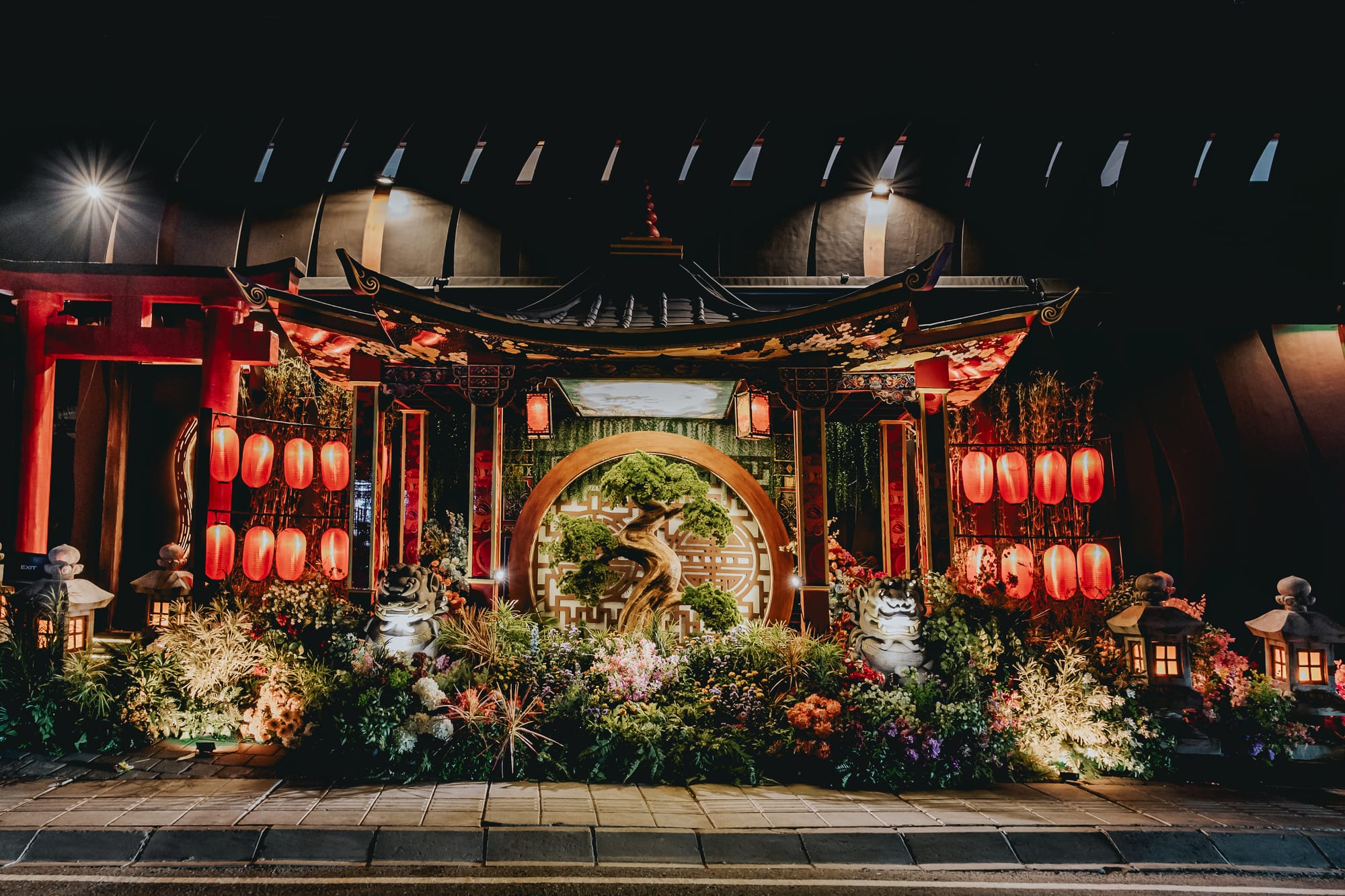
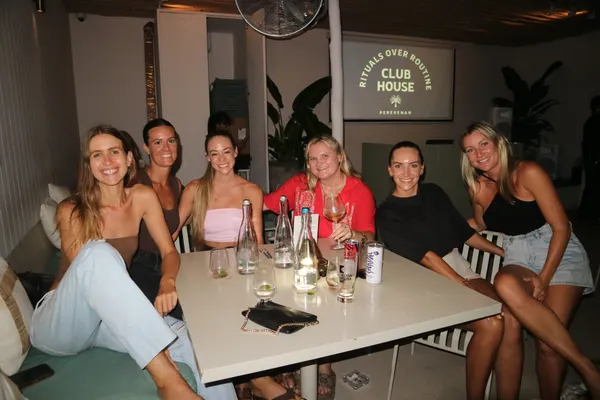
Inside, the room was just starting to fill up. I sat down at one of the tables. The host of the night, Chef Carlos Barvo, was already in the room talking to guests in the dining room. I learned Miss Fish actually has two rooms going at once: a lounge room where people were already mid-set menu, and the dining room, where I was, where the 12-course omakase experience was about to start.
The Omakase, and a Chef Who's in Love With a Fish
At 9pm sharp, Chef Carlos walked out and the meal began. Twelve courses. Three hours. He hosted the entire thing personally, plating in front of us, walking us through every dish like a story he couldn't wait to tell.
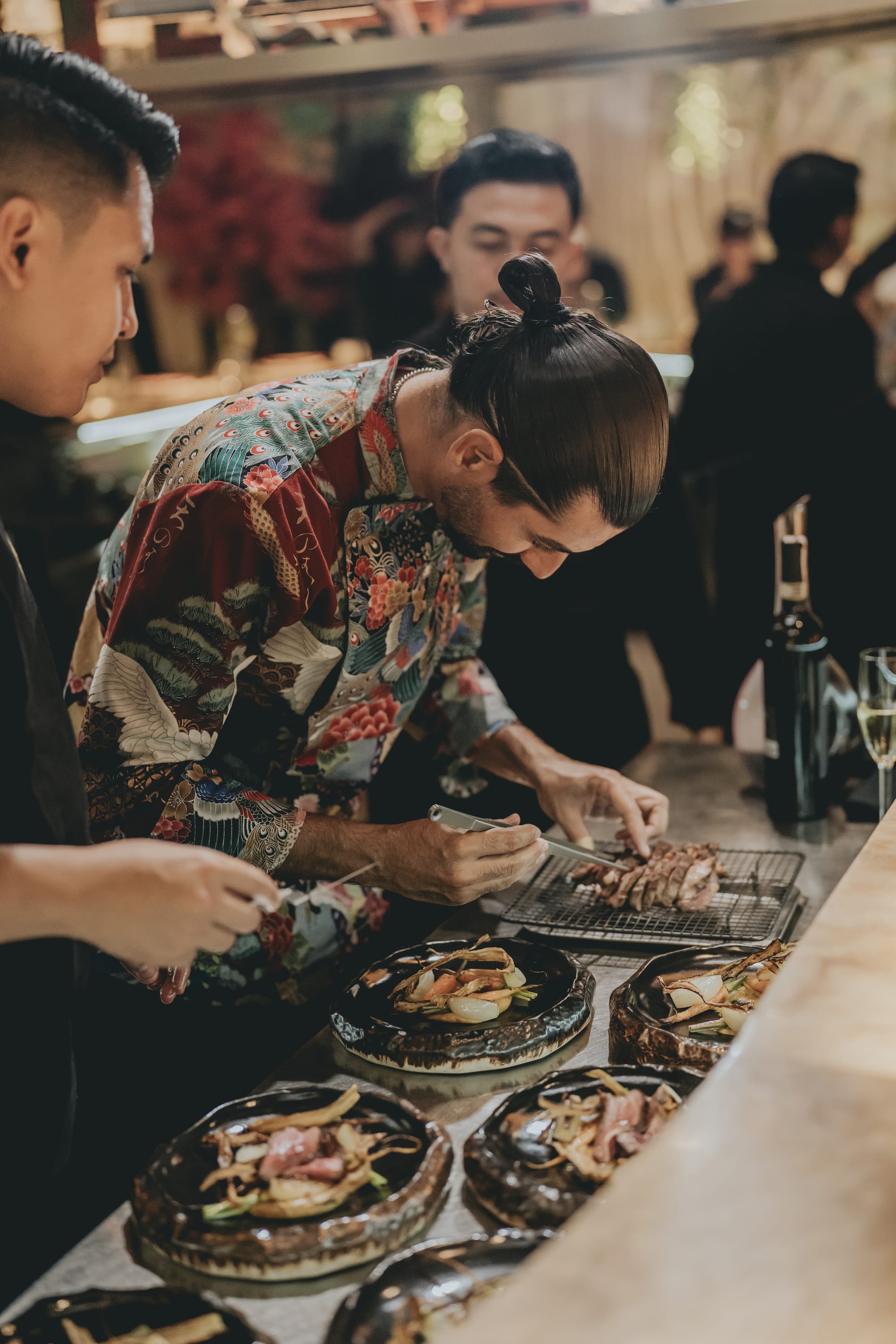
We started with water (still or sparkling, the usual ask) and then the first plate: a tuna roll. Smoked tuna tartar, crispy seaweed cylinder, yuzu gel. Built by hand at the counter, placed in front of each of us one by one. It looked like an art piece.
Then came the cold appetizer, and I have to stop here for a second. Hamachi tiradito with strawberry vinaigrette and salsa jengibre, finished with the thinnest slice of fresh strawberry on top. I've never had savoury sushi-style fish meet strawberry like this before. The strawberry doesn't take over. It just sits behind everything as an aftertaste, this little fruit note that lingers and never tries to compete. Chef Carlos told me later he got the idea from a video of strawberries being burned over a bonfire, and from gazpacho, the cold tomato soup he grew up with in Spain. The hamachi is from Hokkaido. The dish is basically Spain and Japan having a quiet conversation in Bali.
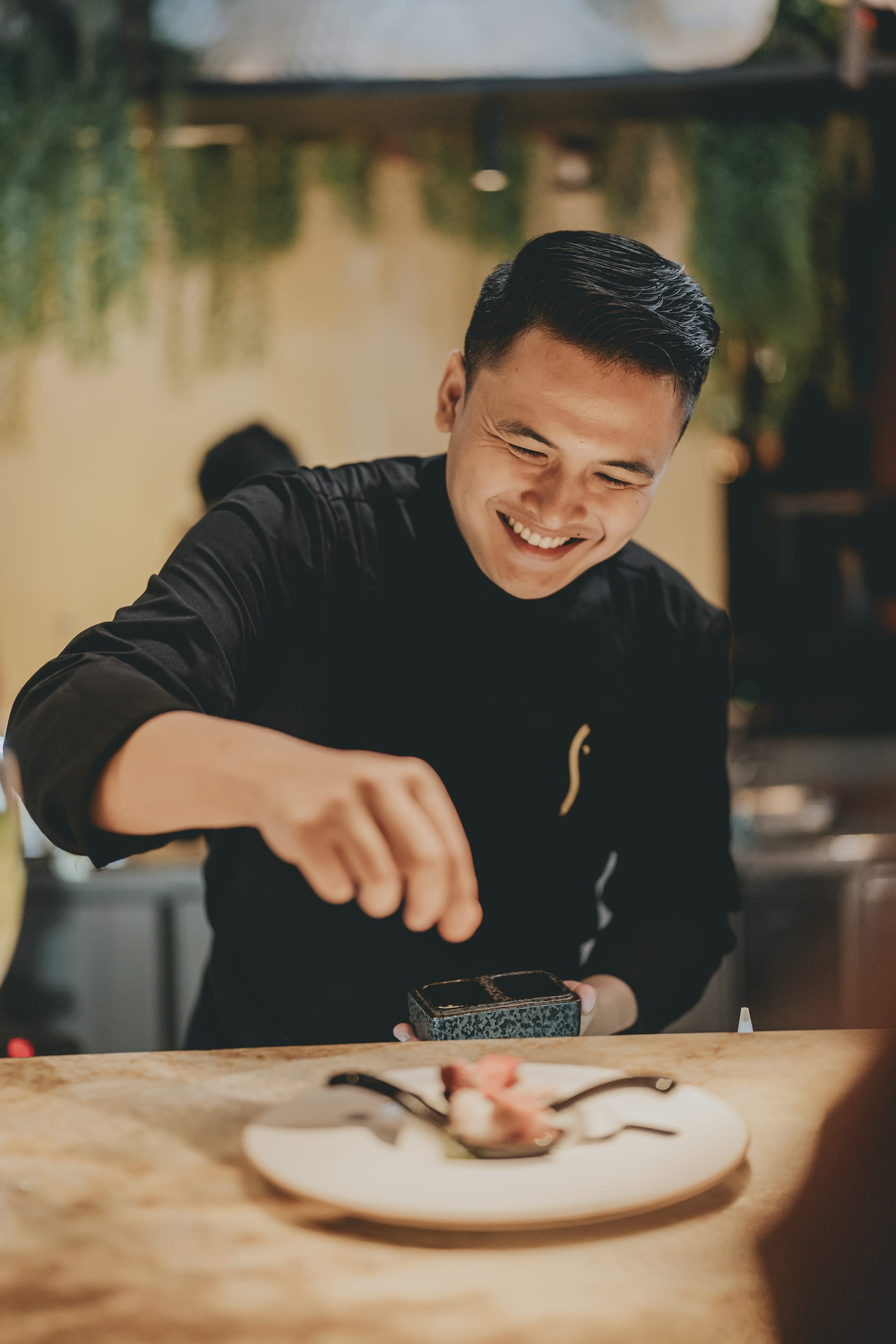
That came with the first cocktail of the night: the Shunka. Tanqueray gin layered with citrus, fermented apple, fresh shiso, finished with a delicate carbonation. Bright, sweet, refreshing. And here's the thing about the pairings at Matsuri: every single drink is built specifically for the dish it comes with.
Next: kuruma ebi. Butter-poached Japanese king prawn from Tokyo, the size of your palm, served with cocktail sauce, lime foam, and herb oil. When they started cooking it, the smell filled the entire dining room. Butter and prawn. I'm not even being dramatic, I wanted to bottle it and use it as a room diffuser at home. Paired with a Konishi Daiginjo Hiyashibori sake. And here's the wild part, the sake tasted like a cocktail. Fruity, smooth, layered. It was just the sake, but it tasted composed. The chefs told us to sip it before, during, and after the prawn.
Then came one of my favourite moments of the entire night. Chef Carlos walked out holding a whole fish. Not a portion. A whole, red, big-eyed deep-sea snapper that he was carrying like a fisherman carrying his catch off the boat. He started telling us about it and his face lit up the way kids' faces light up when they tell you about their favourite toy. A chef who's genuinely excited to talk about an ingredient.
The sushi course came from that fish. Kaisho maki, a nigiri of the day, and an otoro temaki of Japanese bluefin tuna belly with negi. Each piece was built at the counter, brushed with house-made soy individually, a touch of salt, and placed onto your plate while Chef Carlos talked you through it. Honestly some of my favourite plates of the night, even though they look the simplest. Each fish had its own distinct flavour, some sweeter, some cleaner, some richer. Paired with Suiren, a cocktail made with Cîroc vodka and junmai sake balanced with peach and Chilean Sauvignon Blanc, finished with an apple yogurt spirulina foam. Refreshing, totally different profile from the Shunka, exactly what your palate needed.
The Cocktail That Wasn't a Cocktail
Then they brought out the palate cleanser, and I genuinely thought they'd made a mistake.
It came in a glass that looked exactly like a cocktail. I'm sitting there thinking, why is the kitchen serving drinks? You sip it, and instead of a cocktail it's a cooling, clear dashi consommé. Served with a little flight of pickles on the side: takuan, tomato, cucumber. It became this whole bonding moment at the counter where we all went around saying which pickle was our favourite. Mine was the takuan (the yellow pickled radish). The diner next to me was tomato. Next to him was cucumber. By this point I'd known these people for about an hour and a half and we were already arguing about radish.
The Tomahawk Show, and a Chip I Couldn't Stop Eating
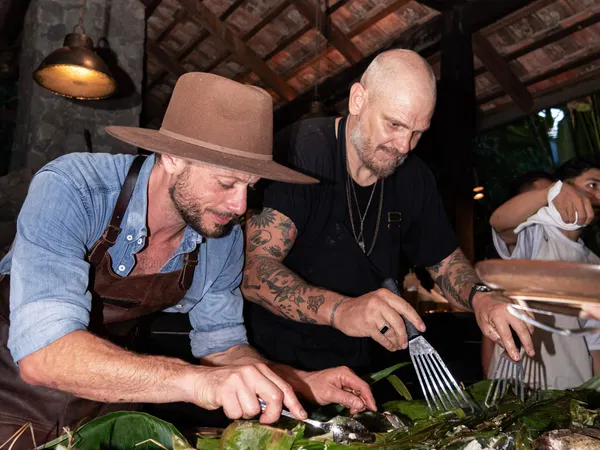
Then the main came, and Chef Carlos brought out a full tomahawk still on the bone. Walked around with it. Held it up so everyone could see. Then he started carving it in front of us: the knife went through that meat like it was butter, like that bone wasn't even there. He torched each slice on the spot and plated it with burnt cauliflower puree, chimichurri, and gobo chips.
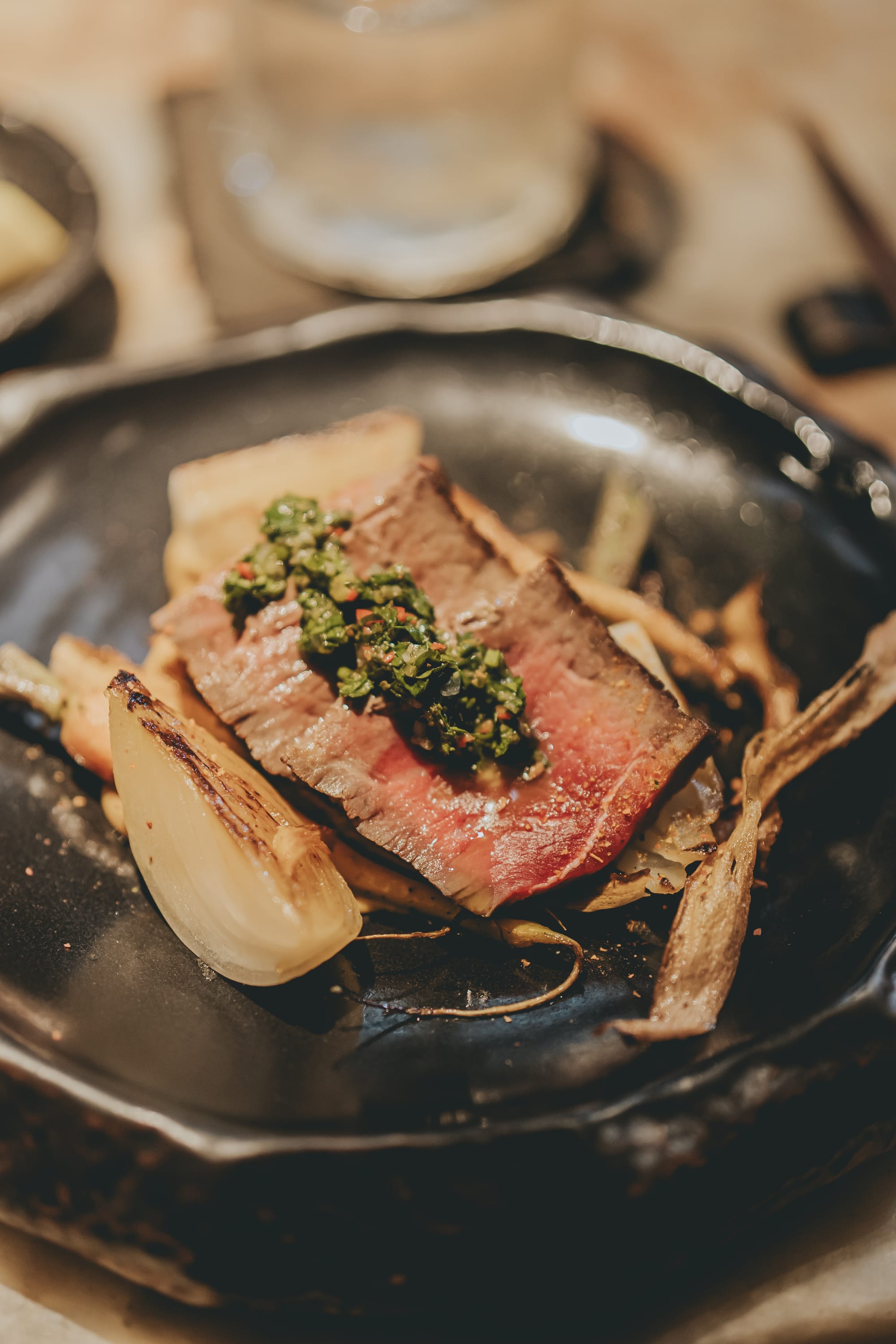
Look, the tomahawk was excellent. Deeply seasoned, properly rested, beautifully done. But the thing I couldn't stop eating was the gobo chips. Burdock root, sliced paper-thin, fried until earthy and crisp. First time I'd ever had it. Most unique thing on the plate.
Paired with a Beni Di Batasiolo Barolo DOCG 2019, full-bodied, with cherry, tobacco, spice. Red wine and red meat, no further notes needed.
Don Julio at the Counter, and the Sugar That Had to Be Cracked
Right before dessert, the bar manager came around and poured shots of Don Julio. Tequila around the omakase counter at 11pm. By this point I want to tell you we were all friends. Like full-on friends. Strangers two hours ago, family by the time the shot landed.
Pre-dessert came next: caramelised pineapple with port wine ice cream. After the tomahawk this was exactly what the palate needed, refreshing and light. Then the actual dessert: Butter & Umami, which is croissant gelato with salted butterscotch, soy reduction, almond crumble, and raspberry, all sealed under a glass-thin sheet of sugar you crack open yourself. The whole counter took turns. Wait, do it again, I want to record it. It was the cutest thing in the world. Underneath, croissant gelato is a flavour I'm still thinking about. Buttery, salty, then soy-deep, then a bright raspberry finish. Paired with the Momoiro: Don Julio 1942 Añejo Tequila with mixed berries, peach, and vanilla. Smooth, lingering, the closing line.
The Whole Time, Japan Was Happening Around Us
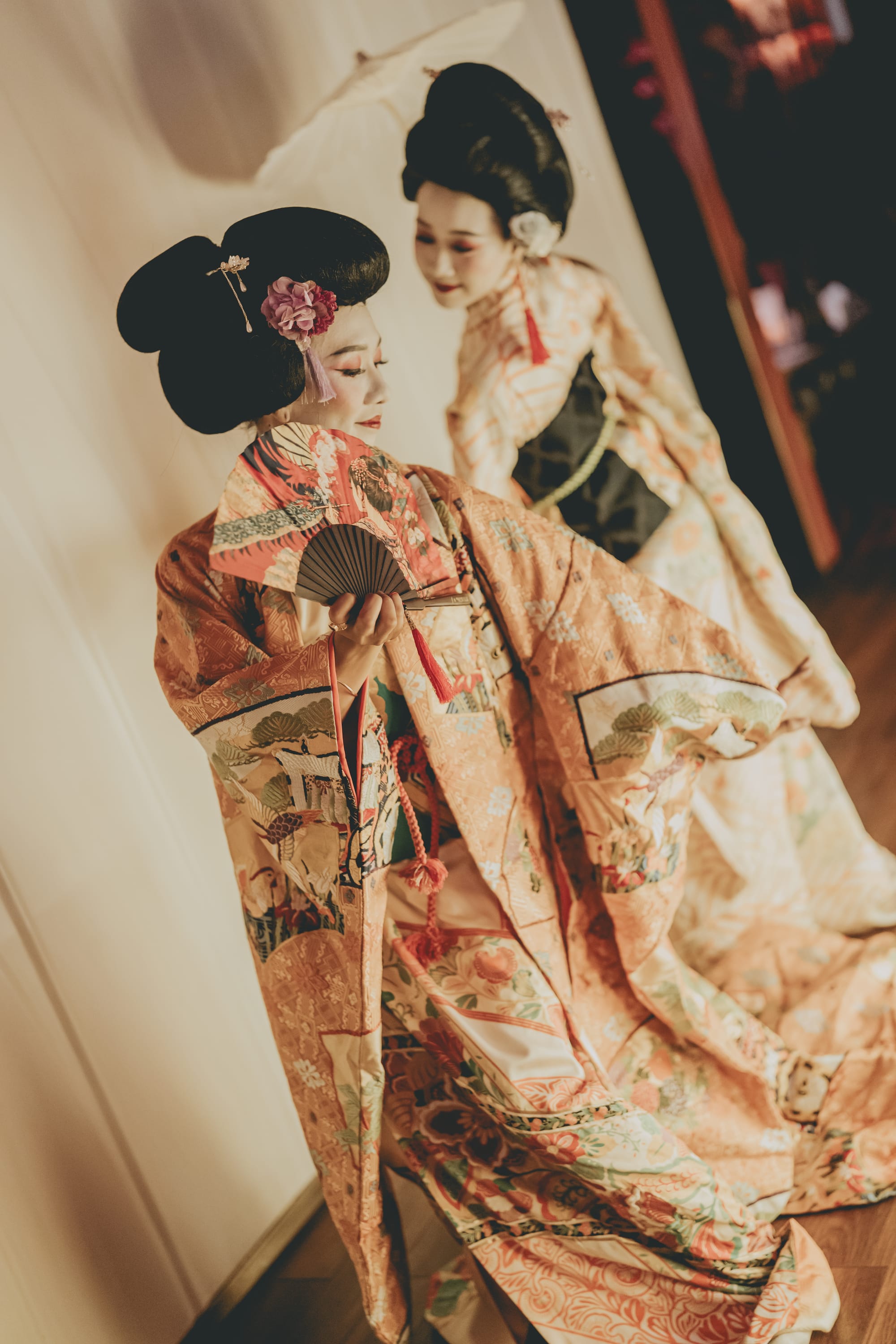
I haven't even talked about everything else that was going on. Before dinner started, there was a full taiko drum performance: traditional Japanese drumming that basically sets the heartbeat of the whole night. Between courses, fan dancers. Mask dancers. Couple performances. They moved between the tables, then performed in front of us, then disappeared back into the room. None of it felt overlaid. It all felt like part of the meal.
When Midnight Hits, the Kitchen Becomes a Bar
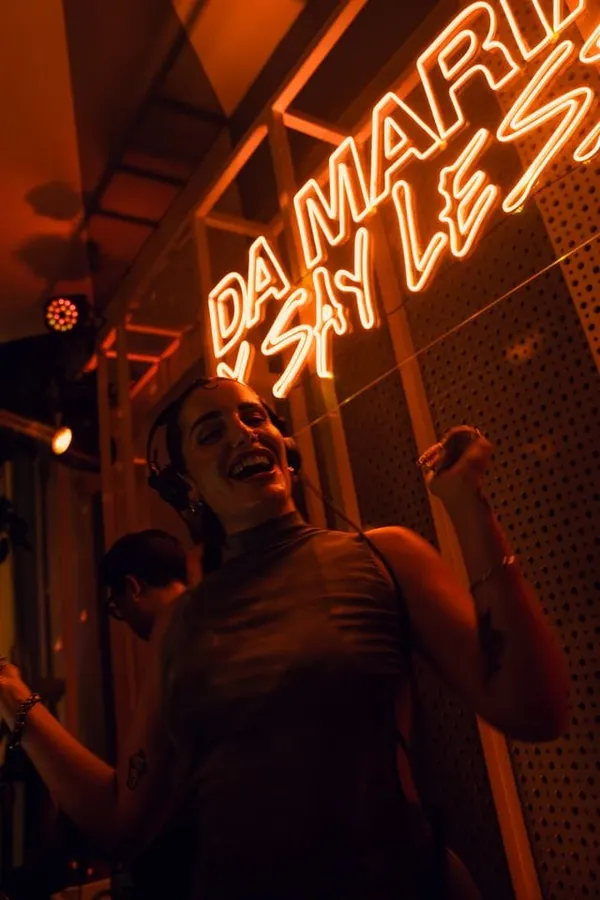
Then midnight came, and Miss Fish did the thing it's most known for. In about ten minutes, the open kitchen we'd been watching all night got broken down and rebuilt into a bar. The lounge and dining areas converged. Lights dimmed further, music shifted, and Miss Fish moved from omakase into its after-dark phase. The room was full. People were dancing. The new friends I'd made over twelve courses were right there with me, drinks in hand, talking over the music.
This is apparently just what Miss Fish does, every night. The whole concept is built as a paced progression: omakase and early cocktails, into social rhythm, into deep after-dark energy. Music direction, lighting, even the décor shifts as the night moves. Miss Fish opened in 2022 and now hosts more than 2,500 guests a week.
What Matsuri Actually Is
I sat with Chef Carlos later and asked him to put Matsuri into words. He's Executive Chef at Miss Fish, half Spanish, half Colombian, with fifteen years of Japanese cooking behind him, mostly in Barcelona, at a high-end Japanese restaurant. He arrived in Bali in February 2020 and the pandemic hit the next month. He never left. By 2022 he was part of the Miss Fish project. Four years later, here we are.
His framing of the menu:
"It's a gastronomic progression. You go from light flavours and textures to deeper umami. It's an evolution that goes up. We put a couple of palate cleansers in the middle to revive the palate, but it's a full evolution from the beginning to the dessert."
His three personal favourites from this year's menu, in his own ranking: the cold appetizer (the hamachi tiradito), the hot appetizer (the kuruma ebi, for the ingredient itself), and the main (the tomahawk, for the carving show). His take on why you should try the whole thing:
"There's no option to only have one of them. Everything makes sense as a whole thing."
And what he most wants people to leave with:
"They are going to feel transported to Japan. The traditions, the culture. We transform the venue into a shrine and all the performances take you back to Kyoto. The most special thing is that we keep our essence as Miss Fish. We're not a traditional Japanese place, but we still get to bring the traditions and keep them with our own touch. Even people who have been to Tokyo and Kyoto are going to experience something really outstanding."
One Night a Year
Matsuri has been a Miss Fish annual since 2024. Three nights only, every June, completely sold out by the time the doors open. The 2026 edition wrapped up on the 13th and the next one isn't until 2027.
And if you've never been to Miss Fish at all, the cube on Jl. Raya Semat is open every other night of the year too. Pick a Tuesday, a Friday, a Sunday. Start there. The black cube isn't what it looks like from the road.
Matsuri took place 11 to 13 June 2026 at Miss Fish. The 12-course Omakase experience was hosted by Executive Chef Carlos Barvo and Miss Fish chef team with cocktail pairings by Bar Manager Rahadhie Putra. Nadila attended as a guest of Miss Fish and all opinions are Nadila's own.
Frequently Asked Questions
What is MATSURI at Miss Fish Canggu?
MATSURI is an annual three-night event at Miss Fish in Canggu, Bali, running each June since 2024. It features a 12-course Japanese omakase by Executive Chef Carlos Barvo, paired cocktails, and live performances including taiko drumming and fan dancing.
When is the next MATSURI at Miss Fish?
The 2026 edition ran from 11 to 13 June 2026. The next MATSURI is scheduled for June 2027. The event sells out before the doors open, so it's worth following Miss Fish on Instagram for release dates.
Where is Miss Fish located in Bali?
Miss Fish is on Jl. Raya Semat No. 4, Tibubeneng, Canggu — a black cube-shaped venue known for its omakase dining room, lounge, and midnight transformation into a bar. The Bali flagship caps each night at under 80 guests.
Who is the chef behind MATSURI?
Chef Carlos Barvo, Executive Chef at Miss Fish, is half Spanish and half Colombian with around fifteen years of Japanese cooking experience, mostly trained in Barcelona. He has led the Miss Fish kitchen since 2022.
What happens at Miss Fish after midnight?
Around midnight, the open kitchen is broken down and rebuilt as a bar, and the omakase and lounge rooms converge into a single after-dark space with dancing and DJ-led music. This nightly transformation is a core part of the Miss Fish concept.