
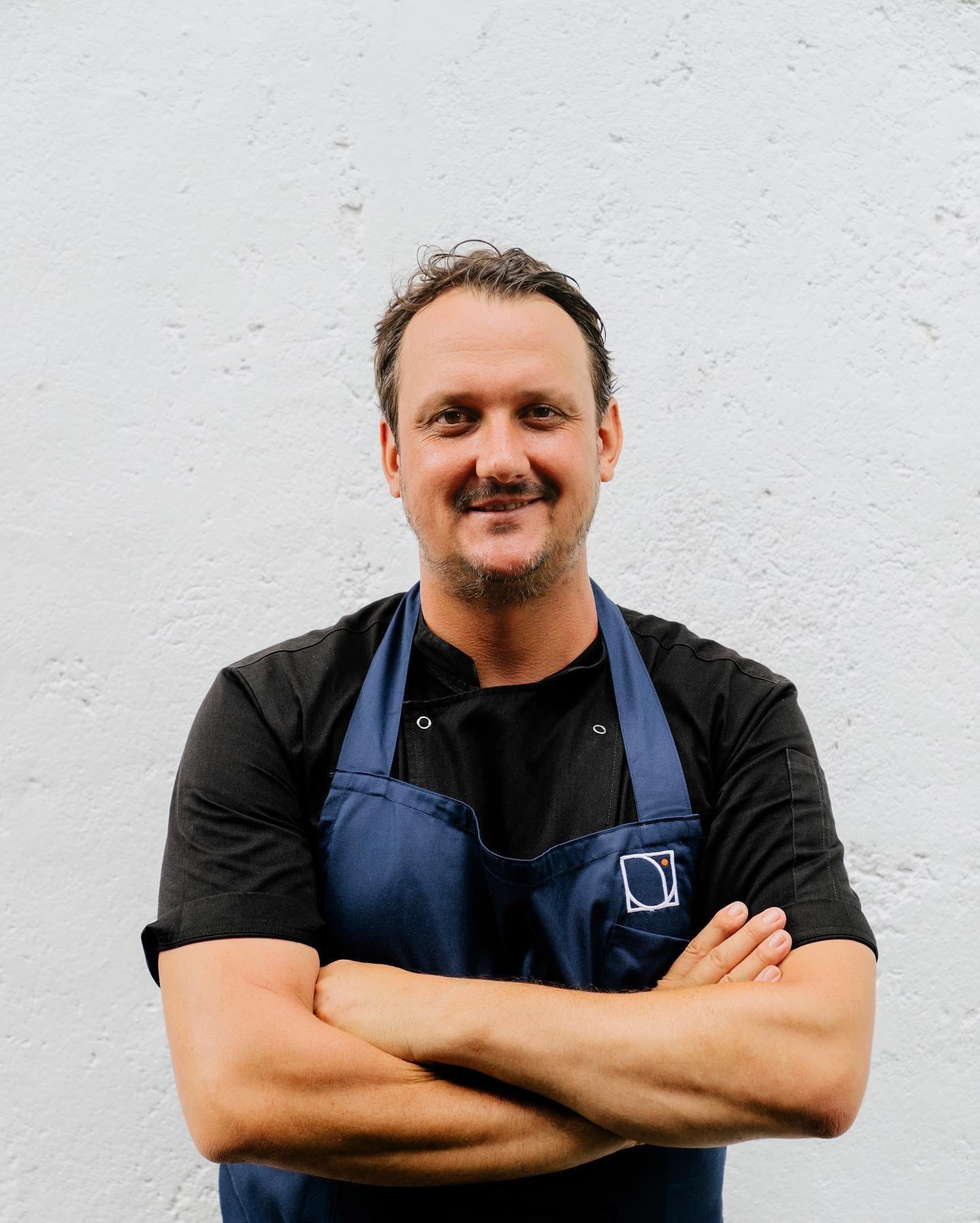
A Melbourne-trained chef who spent his twenties cooking Southern European food in London and New York, Kieran Morland has spent the last sixteen years building two of Bali's more distinctive restaurants: one built entirely around Indonesian regional cuisine, the other a rolling, wood-fired homage to the Mediterranean. Neither cuisine, he insists, makes him a master of anything.
Kieran Morland is chef-owner of Luma in Canggu and Sangsaka in Seminyak, two restaurants that share almost nothing except him. One changes its menu daily and runs on a wood-fired hearth. The other is built dish by dish, region by region, around Indonesia's own culinary map, deliberately unfused.
From Melbourne to Bali by way of everywhere
Morland has been a chef since high school.
"I can't really imagine any other time I didn't want to cook."
He trained in Melbourne, worked in Noosa, then moved to London, then New York for a year, including a stint at Momofuku, before landing in Bali in 2009. Ben Cross, now the owner of Masonry, invited him over for a one-month stint at Kudeta. He stayed two and a half years. Sixteen or seventeen years later, he's still here.
"It's weird how life takes you here. I just fell in love with Bali, basically."
In London, he'd opened a restaurant called 10 Greek Street with a friend, Cameron Emirali. That partnership resurfaces later in the story, on the other side of a global pandemic.
Learning Indonesian food the hard way
When Morland opened Merah Putih in 2013 with business partners Jasper Manifold and Melissa McCabe, his culinary background was entirely Southern European and modern Asian. Building a modern Indonesian menu from that foundation was, in his words, "really scary."
His now-wife, Yunika, filled the gap. Her mother runs a restaurant in Surabaya and cooks without a blender or a rice cooker, everything ground by hand, the traditional way. Morland spent mornings there making nasi kuning from scratch under her supervision.
"She doesn't use a blender. She doesn't have a rice cooker. Everything is just, you know, ulek, ulek."
His mother-in-law remains, in his telling, his harshest critic.
"That's not right, you need to put more of this, not enough lemongrass."
He does the impression, then adds that she's the person he's most afraid of walking into the restaurant.
It wasn't Morland's first exposure to Indonesia. His sister was an exchange student in Semarang in 1992, and he'd been visiting on and off since, long before Bali became home.
Merah Putih ran for roughly a decade and became a genuine success, built on the idea that Indonesian food could sit alongside a proper glass of wine without dialling back the flavour, rendang or ikan bakar served the way a modern Asian restaurant in Melbourne or New York might plate a dish, just built from Indonesian ingredients instead.
In 2016, Morland followed it with Sangsaka in Kerobokan, a smaller, more intimate 40-seat restaurant with an open kitchen, built around one specific technique: charcoal and wood, coffee, clove, rambutan and coconut husk, each imparting a different flavour depending on the dish. The kitchen leans into ingredients most menus in Bali skip past: jukut undis, a local lentil, kenari nuts, andaliman, torch ginger, belimbing, kencur. Upstairs sits Di Atas, a small cocktail bar reached through the restaurant's private dining room or via a side alley.
When COVID hit and the bigger restaurants stopped being sustainable, Morland sold his shares in Merah Putih and kept Sangsaka running through the worst of it.
Building Luma out of a drunk phone call
Luma opened in June 2022, and its origin is less considered than Sangsaka's. Cameron Emirali, Morland's old business partner from 10 Greek Street in London, called one night, fed up with the constant open-close cycle of pandemic-era London hospitality.
"I was like, come to Bali. The weather's amazing all the time, it never rains, the produce is so good, you'll love it. I kind of sold him the dream."
Emirali spent over twenty years in UK kitchens and had made his name at 10 Greek Street in Soho with unfussy, seasonal European cooking. Indonesian was never on the table for the new project, since Cam is a Southern European cook through and through: Italian, Spanish, Portuguese. Luma became the outlet for the cuisine Morland trained in originally, this time run by the partner who actually specialises in it.
The menu changes constantly, though not wholesale. Two or three dishes rotate at a time, driven by what's arrived that day: live lobster, good yabbies, a particular cut of meat, whatever a supplier flags as exceptional. It's a deliberate echo of the rolling, ingredient-led wine bar model that shaped 10 Greek Street in London originally, including a nod in Luma's own "little black book" of high-end wines by the bottle, crossed off page by page as they run out each month.
"If you've worked at Luma for a year, you now know 500 dishes rather than just the 30 dishes you'd normally know."
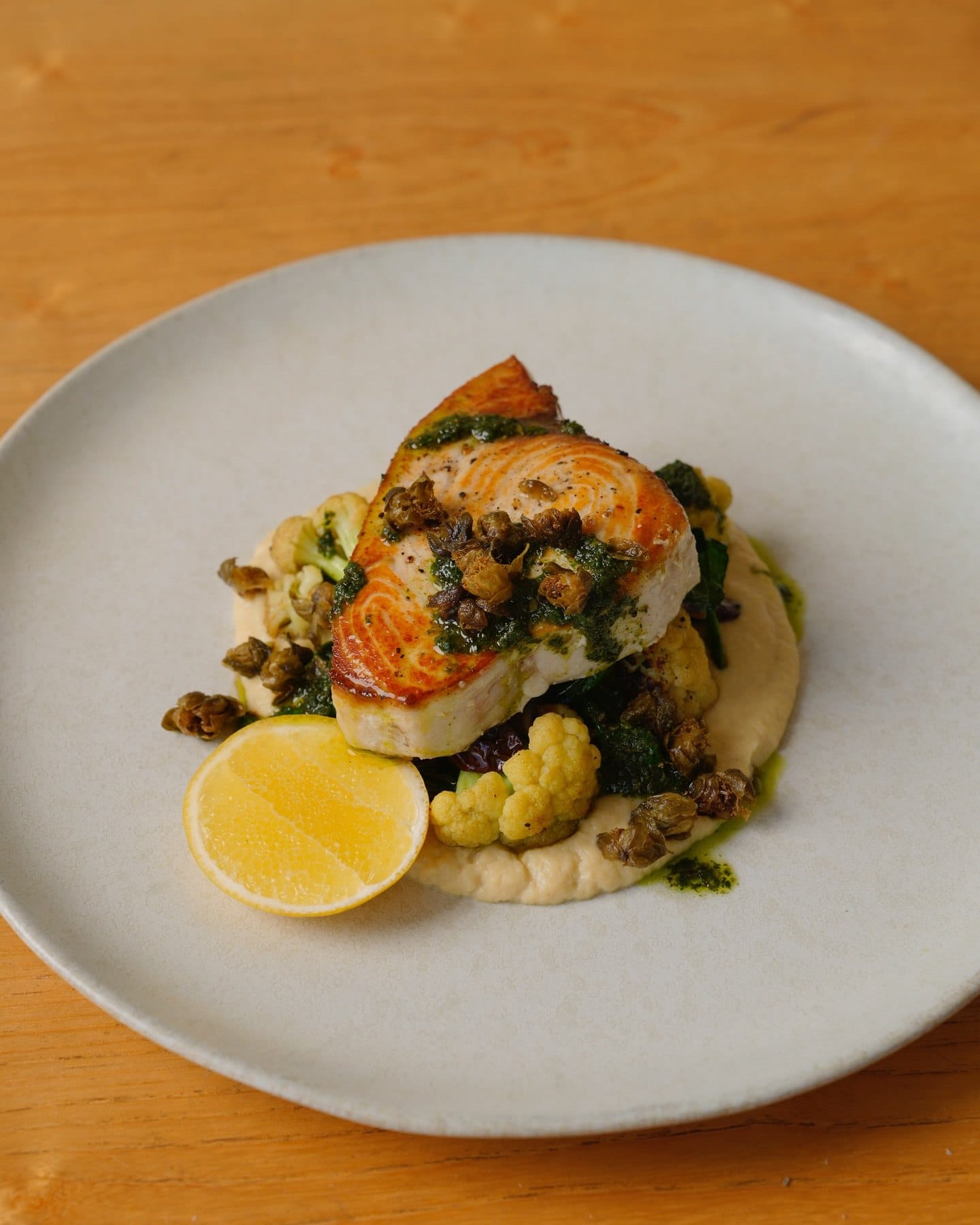
Everything is made from scratch daily: sourdough, focaccia, three rotating housemade pastas, cannelloni, linguine and gnocchi one day, pici and a homemade lobster spaghetti the next. A wood-fired hearth sits in the middle of the kitchen and handles pizzettas, whole fish, prawns, lobster. The menu leans into dishes like grilled octopus with orzo and squid ink aioli, a Batik lobster risotto finished with chilli butter, and seaweed-wrapped prawns with romesco and kenari, Mediterranean technique built on Balinese produce: fern tips, cassava leaves, banana blossom.
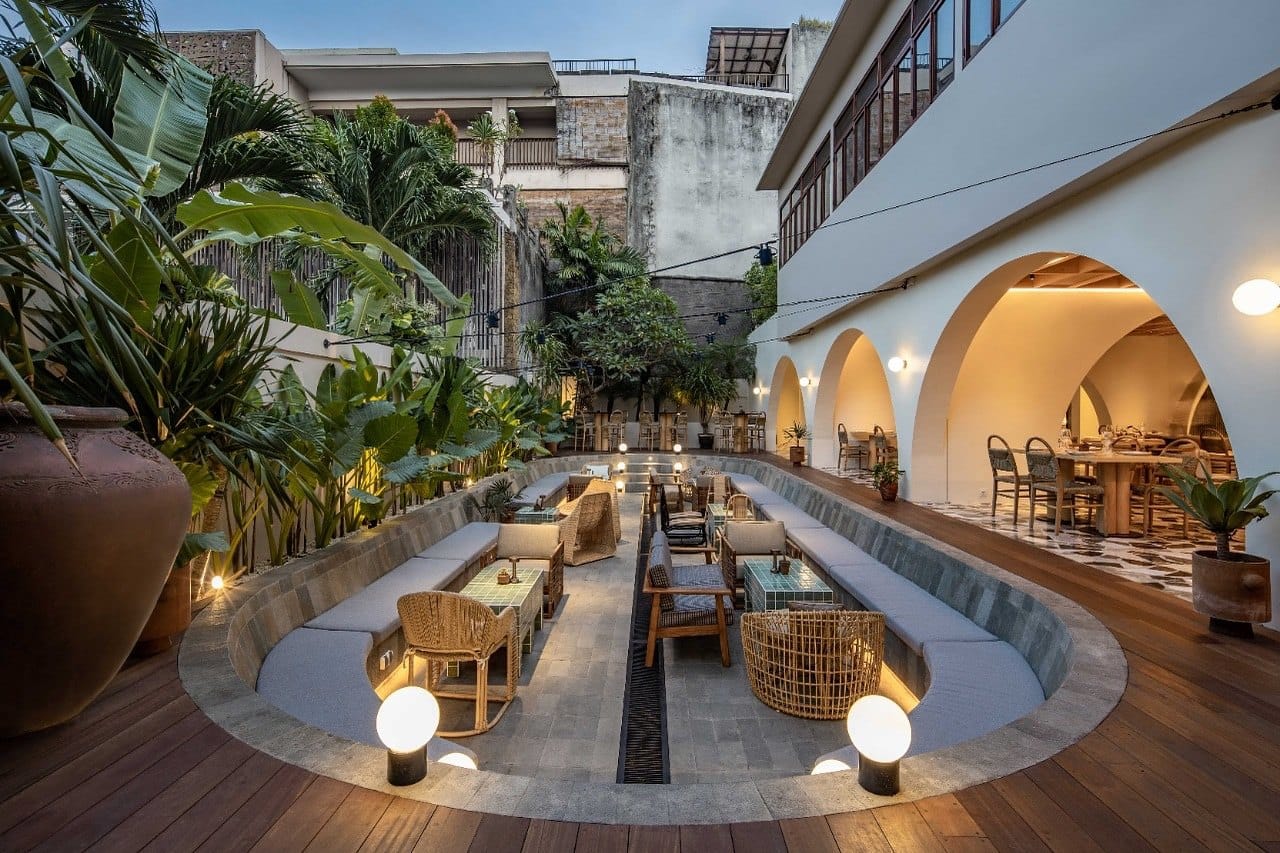
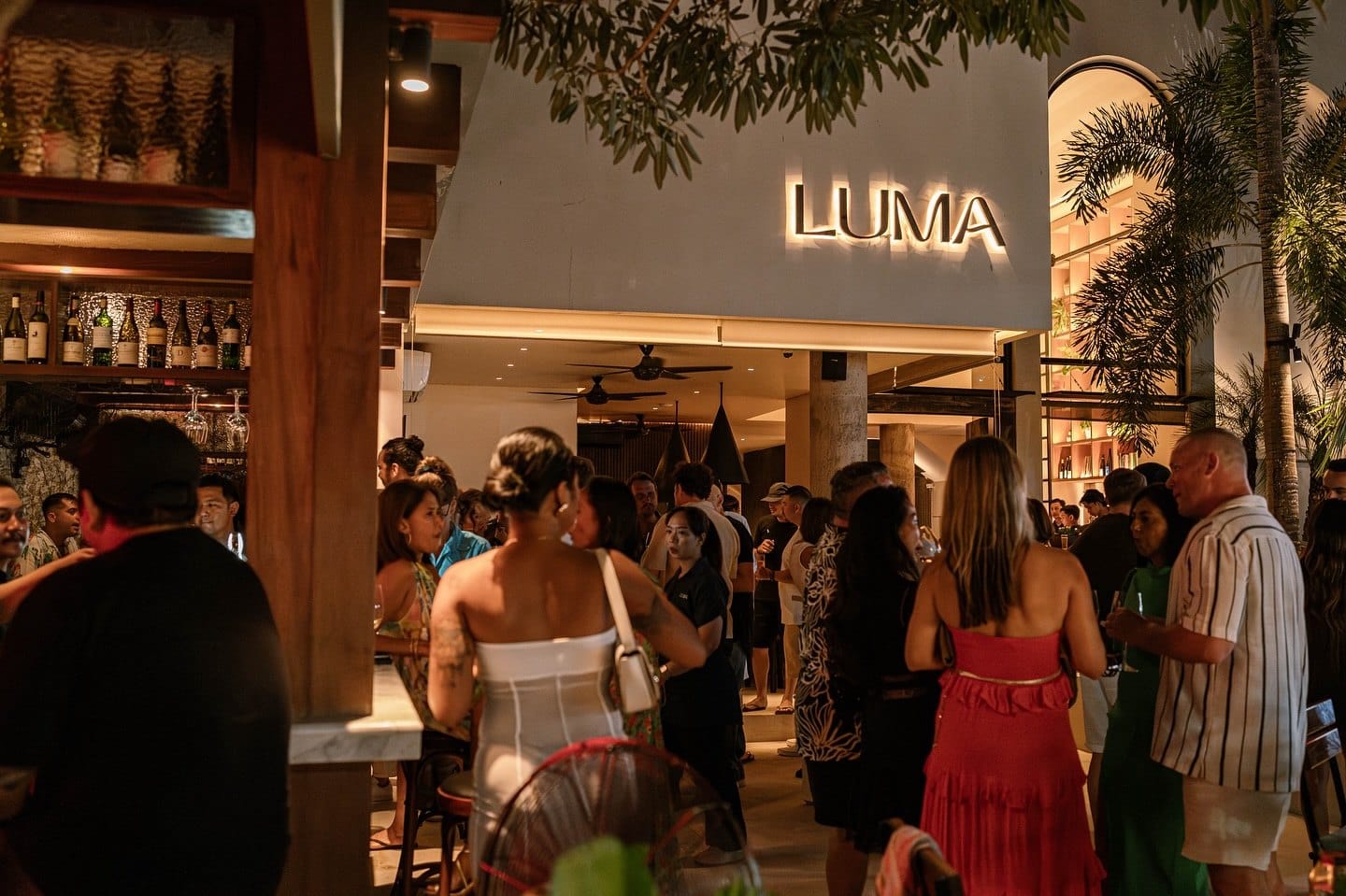
In April 2025, the team added Bar Luma, a taverna-style space on the restaurant's front terrace, seating around thirty guests for rustic Spanish and Italian small plates, draught beer and cocktails on tap, with aperitivo running 4pm to 7pm daily. Roughly once a month, a guest chef takes over the front bar for a casual barbecue night, past guests have included chef Renata Malouk, alongside a DJ and a loose, party-adjacent energy.
Honouring the source, not blending it
Morland is careful to keep the two cuisines separate rather than let them bleed into each other. A Sulawesi dish at Sangsaka won't be built on bumbu genep, a Balinese spice paste, just because both are technically Indonesian. It's the same logic in reverse at Luma: a Southern Italian dish stays Southern Italian rather than drifting north for convenience.
"All I do is just try and cook food that I love. It's bloody hard cooking."
He calls himself the master of nothing, constantly relearning across two continents' worth of regional cuisine: the difference between Sulawesi, Sumatra, Java and Bali on one side, Italian, French, Spanish and Portuguese on the other. It's also, he admits, what keeps him from getting bored after two decades in kitchens, being pulled constantly in different directions rather than repeating the same thirty dishes for years.
Asked, at gunpoint hypothetically, to choose between Mediterranean and Indonesian food for the rest of his life, he won't.
"They're both equally awesome. Mediterranean is like home, but Indonesian has been a slow burn. Nasi padang, I could eat every single day."
What to order
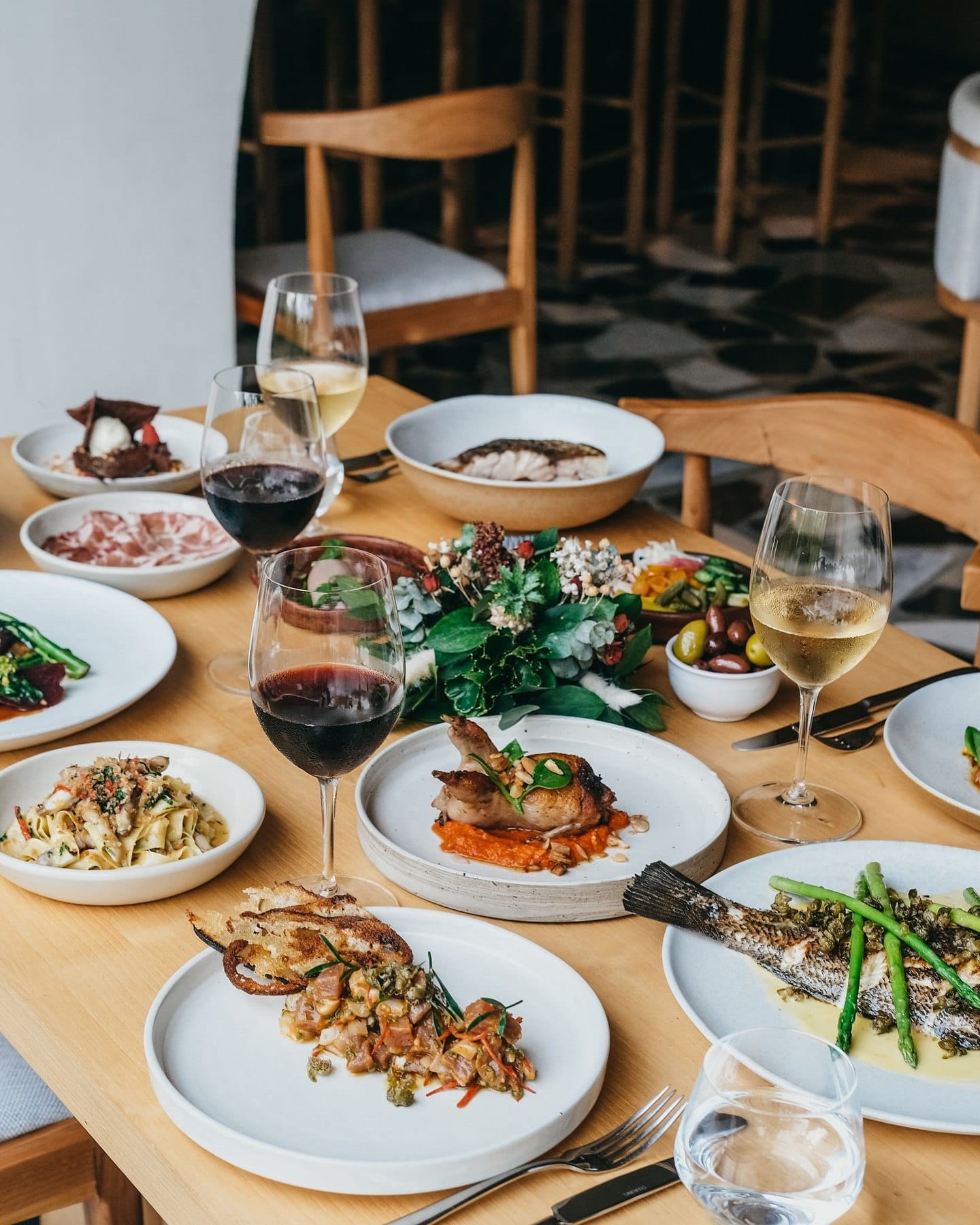
For a group heading out for the night, Morland suggests sharing plates built for a long table: prawns with pancetta, burrata, lobster linguine, little pizzettas, maybe a big rib eye or a rack of lamb, all light and easy to pick at between courses and conversation.
For a date, he points to Luma's small tasting menu, which changes regularly but tends to run through a stracciatella tartlet, tuna crudo, a lobster course, and a lighter meat course, built around olive oil rather than heavy sauce.
To drink: start with bubbles or a martini, work through the wine list by the glass, or the black book by the bottle if you're serious about it, and finish on a Negroni. Nothing unusual, he says, just the classics done properly.
Working less, not more
Morland describes himself as a chef first and a business owner by necessity, still happiest at the stove after twenty years, even if the job now covers everything from staff culture to wine sourcing to keeping two entirely different kitchens honest to their own traditions. His hope for the next five years isn't expansion. He wants Luma to stay a reliable start to a night out in Canggu, a warm-up before the bars and clubs further up Batu Bolong, and he'd like the whole operation to run well enough that he doesn't need to be there constantly.
"Life's pretty good. I'd like to feel like the whole thing is running smoothly enough where I don't have to be constantly here all the time."
Frequently asked questions
Who is Kieran Morland?
Kieran Morland is a Melbourne-trained chef and the chef-owner of Luma in Canggu and Sangsaka in Seminyak. He has cooked professionally since high school, working in Melbourne, Noosa, London and New York, including at Momofuku, before moving to Bali in 2009.
What is the difference between Luma and Sangsaka?
Sangsaka is modern Indonesian, built on regional Indonesian cuisine and charcoal cooking using woods like coffee, clove, rambutan and coconut husk, kept deliberately unfused between regions. Luma is Southern European, Italian, Spanish and Portuguese, with a daily-rotating menu and a wood-fired hearth at its centre.
When did Kieran Morland open his restaurants?
Merah Putih opened in 2013 with business partners Jasper Manifold and Melissa McCabe; Morland sold his shares during COVID. Sangsaka opened in 2016 in Kerobokan and is still running. Luma opened in June 2022 with business partner Cameron Emirali.
What should first-timers order at Luma?
For a group night out, Morland recommends sharing plates: prawns with pancetta, burrata, lobster linguine and pizzettas. For a date, the tasting menu runs through lighter courses like tuna crudo and a lobster dish. To drink, he suggests starting with bubbles and finishing with a Negroni.
Does Luma have a fixed menu?
No. The menu rotates regularly, with two or three dishes changing at a time depending on what's available that day, though the format and style stay consistent.
What is Bar Luma?
Bar Luma is a taverna-style bar on Luma's front terrace, added in April 2025. It seats around thirty guests for rustic Spanish and Italian small plates, draught beer and cocktails on tap, with daily aperitivo hour from 4pm to 7pm.
