The second restaurant from Clean Plate Collective, the group made up of the people behind KALA, Lola's, Lolita's and Two Moods, is an Italian-inspired room in Uluwatu with an open kitchen, a working cheese factory and a cocktail laboratory. We sat down with co-founder Ryan Jefferson a few hours before the doors opened.
It was a few hours before opening at My Dear Clara, and the restaurant wasn't quite a restaurant yet. Construction was still going on around us, staff were moving through the room getting ready for the night, and Ryan was being fitted with a microphone while politely asking us to lower our expectations.
"I haven't been in front of a camera in eight years," he said.
You would never know. On camera, Ryan was calm, unhurried and easy to like, with the kind of low-key charisma that makes you suspect he missed a calling somewhere along the way. Or maybe it's simpler than that. It's not hard to talk about something you live and breathe, and Ryan had clearly spent months living and breathing this place.
It was already his second public appearance of the day. That morning he'd been at his daughter's school, standing in front of 40 kids, talking about America, bald eagles and American food. By the afternoon he was in Uluwatu, talking about burrata. Tough crowd either way.
The front-of-house guy
"I'm just a dude on the island that enjoys good food, with a short resume in hospitality," is how he introduced himself.
It's an impressively understated description for someone who has spent the past eight years building restaurants in Bali. My Dear Clara is the second restaurant from Clean Plate Collective, the group made up of the people behind KALA, Lola's, Lolita's and Two Moods, with a third already in the works.
Count every restaurant Ryan has had a hand in since arriving in Bali and the number climbs to five. He'd rather you didn't.
"If you don't count the closures in between and the mistakes I made in between."
There's a refreshing lack of founder mythology here. Ryan didn't seem particularly interested in making himself the story. He described his role as the front-of-house guy, the person responsible for how people feel when they're in the restaurant, and happily leaves the cooking to the people who actually know how to cook.
My Dear Clara sits a few doors down from KALA and is, depending on how strict you are with definitions, an Italian restaurant. Ryan prefers "Italian-inspired", and the distinction became important the longer we talked.
"We don't want our guests to come in here and be like, 'Oh, I'm walking into Italy.'"
There's no attempt to recreate a trattoria in Rome, nor much interest in the rules that tend to come with calling yourself an Italian restaurant. The inspiration is obvious, but the kitchen has been given permission to take it somewhere else.
Ryan grew up an hour outside New York City with an Italian mother. Trips into Little Italy were part of his childhood, as was the weekly family pizza. His partners love Italian food too, while Chef Zarrukh, who also leads the kitchen at KALA, has spent time working in Sicily.
There is also a less romantic explanation.
"I started opening restaurants with all my favourite cuisines because I want to be able to eat at my own restaurants."
Fair enough.
Dear Clara
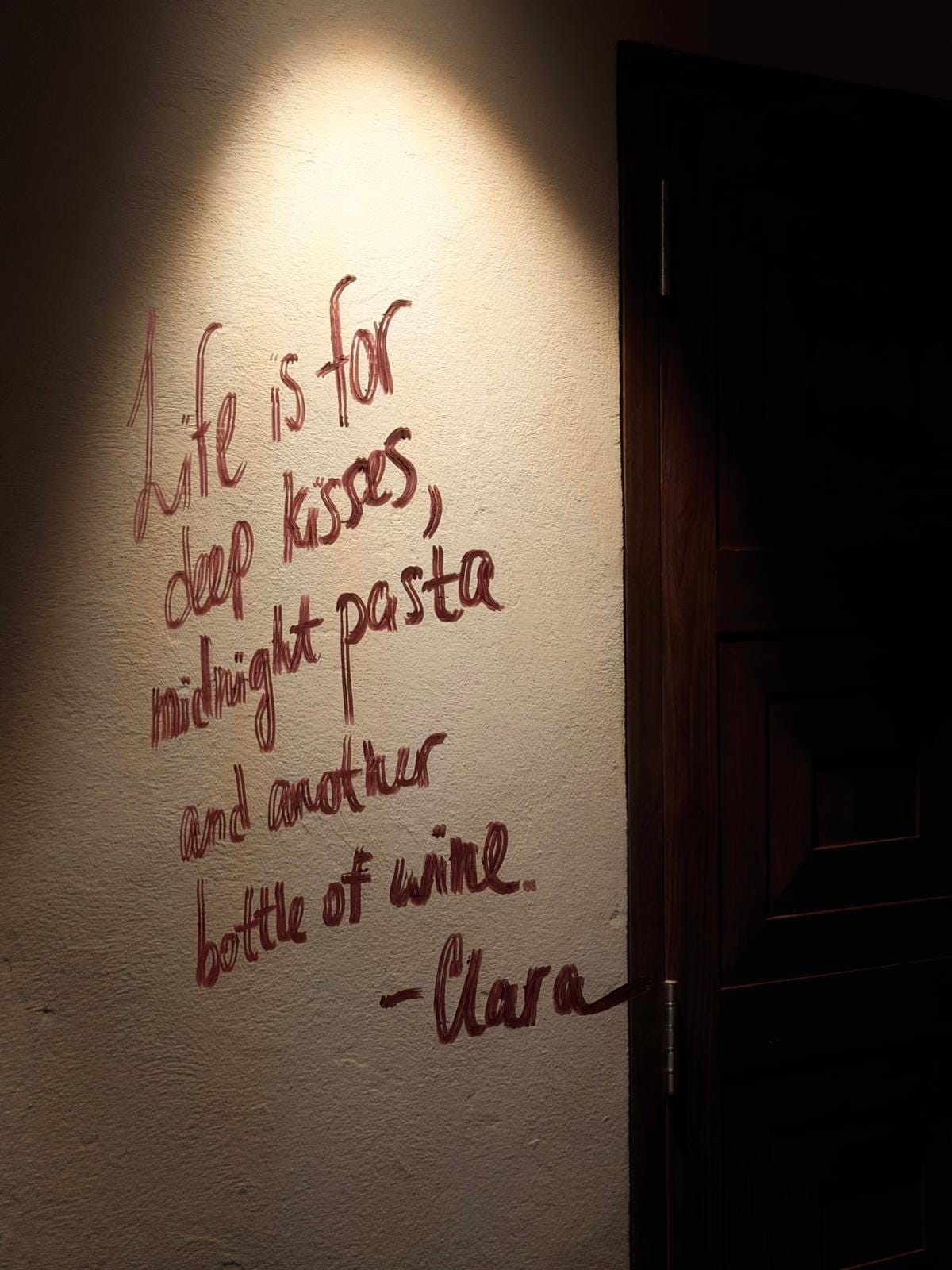
The name was chosen for the feeling. The team wanted something Italian, easy to say and, more importantly, something that did its work before you'd even walked through the door. Adding "My Dear" changed it. Suddenly it sounded like the beginning of a love letter.
"My Dear Clara, I want to come see you tonight. I want to come eat with you. Let's have a good time."
Which is about as clear a brief for dinner as we've heard.
No shortcuts
The restaurant's other line, "No clichés, just food, done right", tells you more about what they've built.
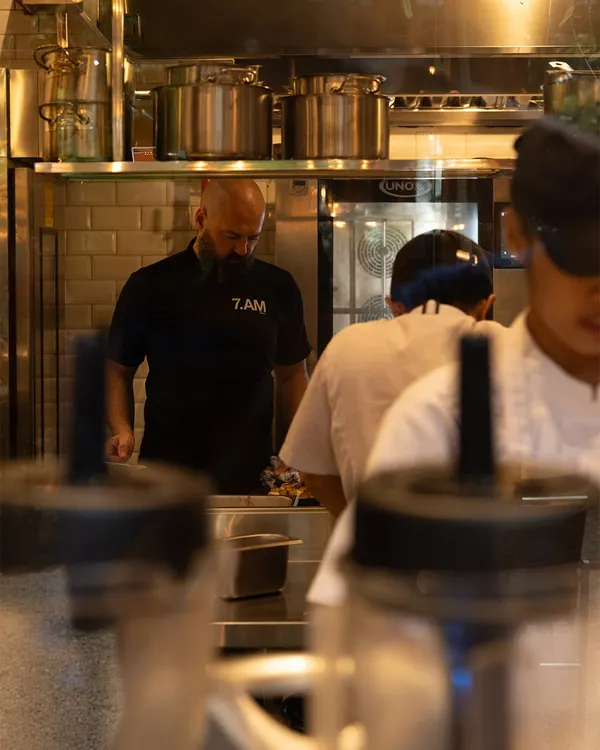
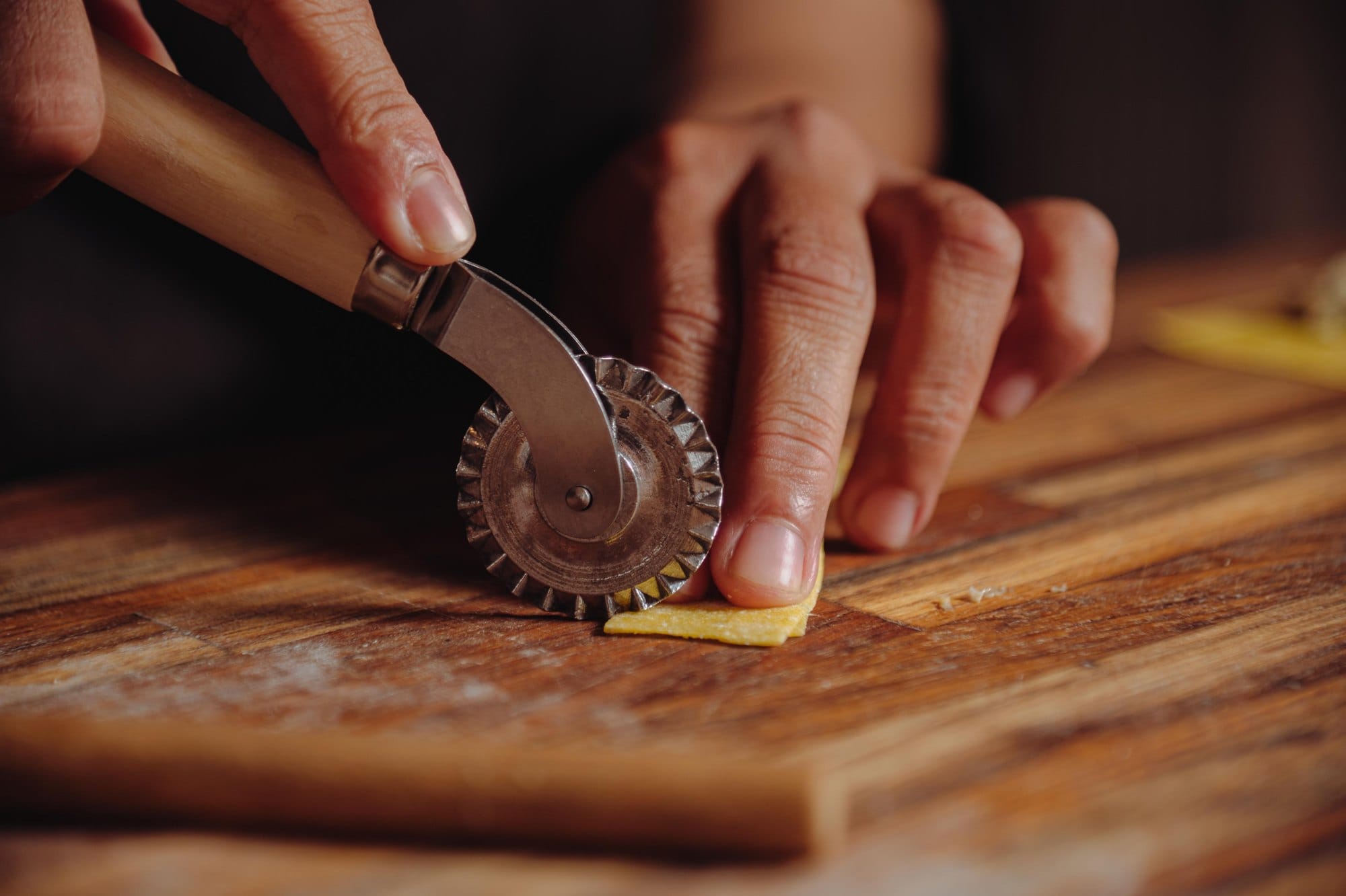
For all the looseness in Ryan's description of the place, there's a serious amount of work happening behind it. Pasta is rolled by hand throughout service. The kitchen is completely open. There's a pizza oven, a cocktail laboratory and, most unusually, a working cheese factory producing almost every cheese on the menu. Burrata, mozzarella, ricotta, halloumi and stracciatella are all made here. Parmesan is the exception.
The cheese factory started with a fairly straightforward problem: they wanted great cheese and they wanted more control over it.
"One of my partners was like, 'Let's just make it ourselves.' And I'm like, 'How do we make cheese? I have no clue.'"
So they learnt. Ryan, apparently, is still learning.
"I'm actually learning how they make cheese."
That lack of pretence followed him throughout our conversation. He didn't suddenly become a cheesemaker because he owns a restaurant with a cheese factory, and he didn't start talking like a chef when we got to the menu. If he didn't know something, he just said so.
What matters to him is that the work is done properly, and that guests can see it happening. While you eat, pasta is being rolled and cheese is being made a few metres away. Ryan was quick to point out that none of this is intended as theatre.
"This is just real work being done to put food on your plate."
Bali is not short of restaurants built around the idea of an "experience", but My Dear Clara doesn't want the kitchen to perform for you. It simply wants you close enough to see what goes into dinner. Chefs are often hidden out the back, visible only through a pass, while the floor team becomes the face of a restaurant. Here, the kitchen is deliberately part of the room.
"They're kind of the main characters."
The idea is less about showing off than removing the curtain altogether.
"There are a lot of shortcuts you can take. We're not taking any of them."
It might be the most useful explanation of "food, done right" we heard all afternoon.
Italian food without the rulebook
Working in Bali also means accepting that Italian ingredients don't magically appear because you've decided to cook Italian food.
Tomatoes became one of the early challenges. Rather than forcing the local product to behave like something grown in Italy, the kitchen developed its own process of cooking and dehydrating them to concentrate the flavour before building them back into sauces.
Even familiar dishes are allowed to wander. Baked Layers, the kitchen's reconstructed lasagna and one of Ryan's favourites, is deliberately unlike the tall, soft stack most people picture. It's built around two main layers, with a crisp top and a balance of meat, sauce and house-made pasta underneath.
"We took inspiration from Italy because we like the ingredients and we like the idea of Italian food, but we made it our own. We made it My Dear Clara."
What to order
When we asked what people should order, Ryan had difficulty narrowing things down.
Start with the burrata, he said. It's made in-house and served simply with their dried tomatoes and charred shishito peppers, giving the cheese nowhere to hide. Then get the Baked Layers.
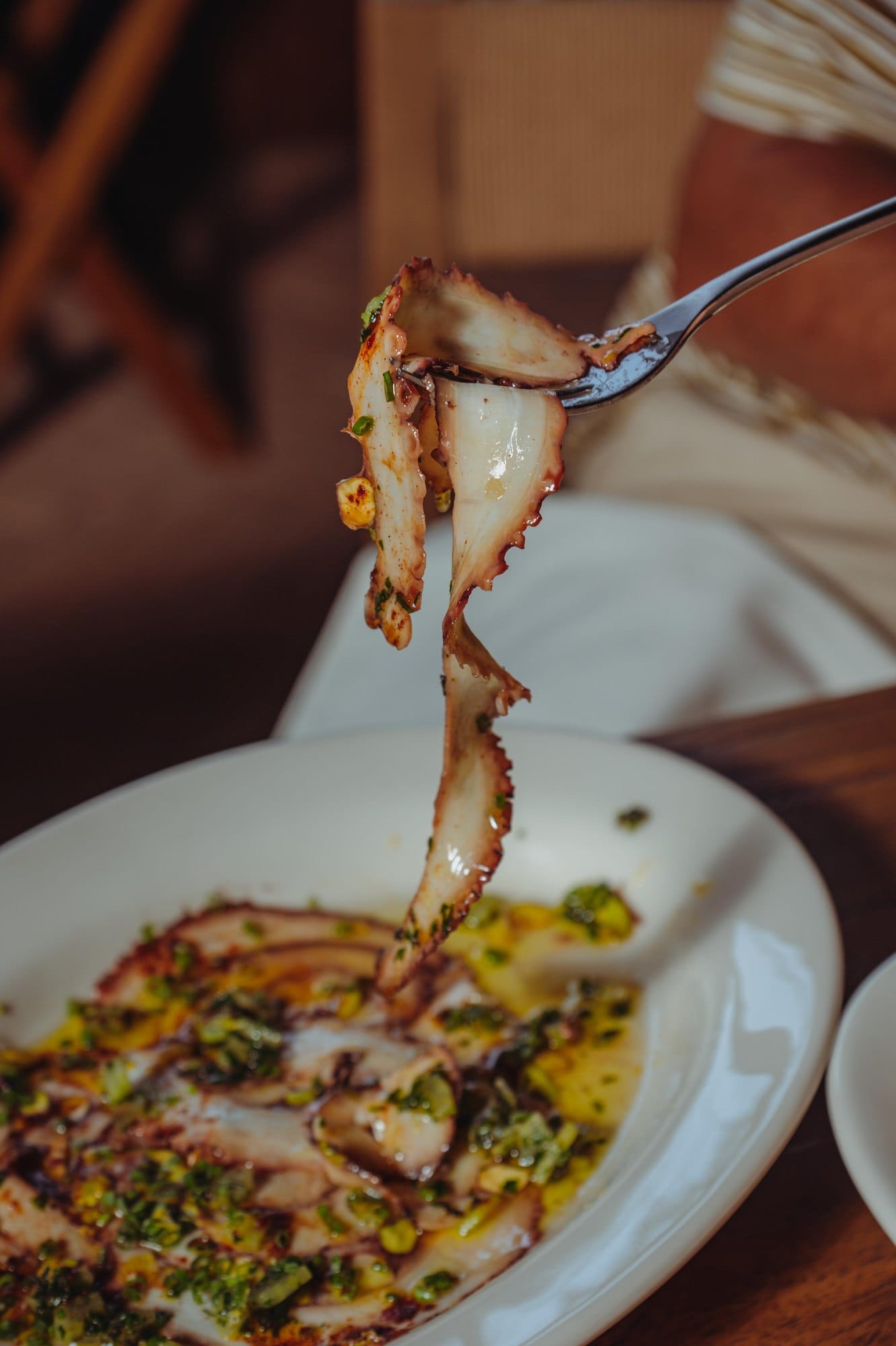
There's an octopus mortadella, sliced so thin it eats more like carpaccio than the thick, chewy octopus people sometimes expect. Chef Zarrukh's pick is the beef cheek pappardelle, made with pasta rolled in-house and beef cheek cooked for eight hours.
And then there's the pizza.
This is the part of menu development where Ryan appointed himself quality control. Growing up around New York pizza gave him strong opinions, and for around two weeks Chef Zarrukh was on the receiving end of them.
"Nah, this doesn't work."
Another version. Still no.
Eventually something changed.
"Chef, you did it. This is it."
Ryan's pick is the mortadella with pesto, pistachio and house-made burrata.
"Try it. It's insane."
A dude that likes food
Ryan talked about Chef Zarrukh with the admiration of someone who knows exactly where his own abilities end. Zarrukh opened KALA with the group and now leads the food at My Dear Clara, bringing his experience in Sicily and what sounds like a fairly relentless interest in cooking.
Ryan once asked what he'd done on his days off.
"I went to restaurants."
Ryan thought he'd misunderstood.
"No, but for real, you had days off. Where'd you go?"
Restaurants.
"This dude loves food."
That obsession is probably a better credential than anything we could put after his name.
At one point, someone mentioned umami. Ryan looked confused.
"I don't even know what that means."
There was an attempt around the table to explain it, which somehow makes things less clear.
Later, Ryan admitted the technical side of food was the part of the interview he'd been worried about. During menu testing, everyone had scorecards. Ryan would taste something, love it and give it a nine and a half. Then he'd look across and see one of his partners had given the same dish a six.
"Damn, that's harsh."
He eventually arrived at a pretty accurate assessment of his own approach.
"I guess I'm just a dude that likes food."
In an industry where everyone suddenly becomes an expert in fermentation, provenance and mouthfeel the moment a microphone appears, there's something very likeable about that.
The laboratory
The same make-it-here mentality continues behind the bar, although things get slightly more scientific.
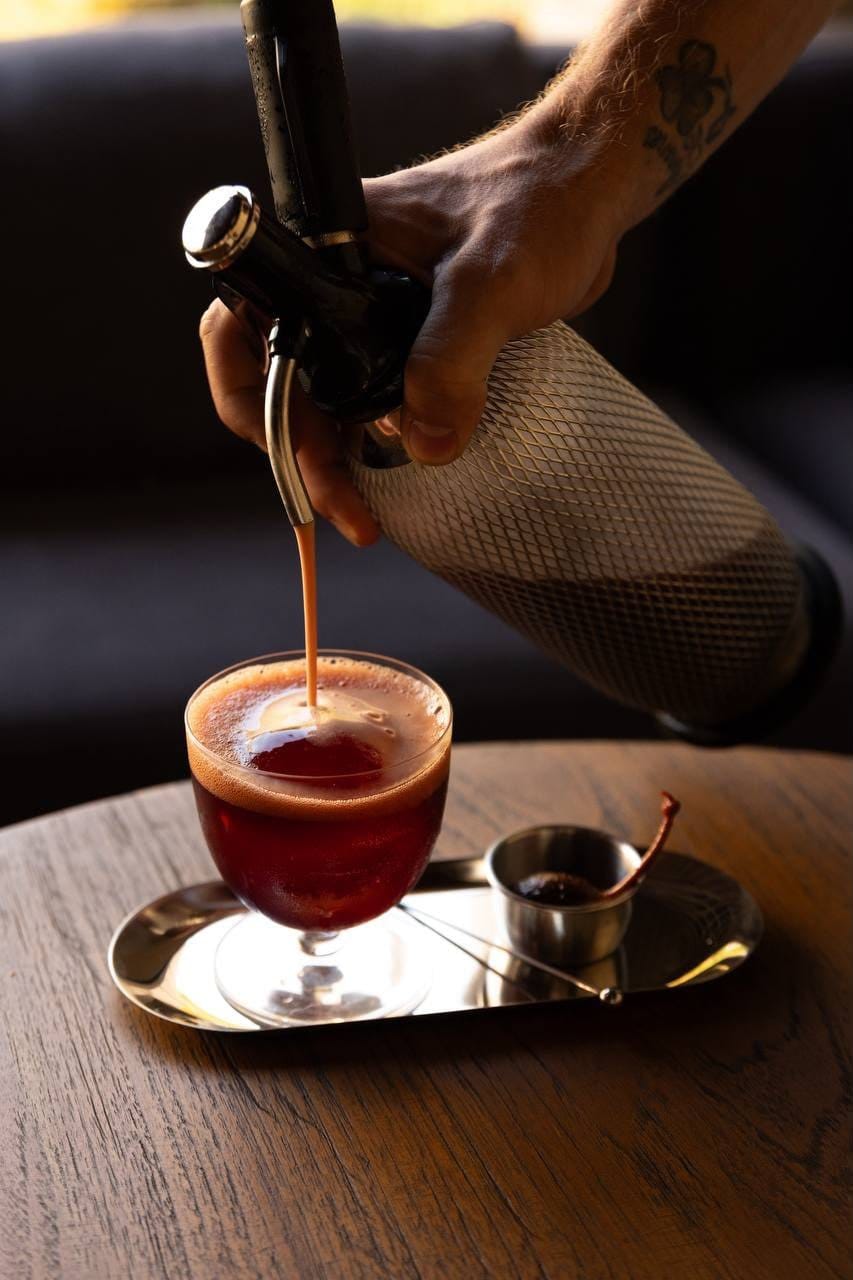
My Dear Clara has what the team calls a cocktail laboratory, built around an evaporator that lets the bar extract flavours from ingredients and use them in drinks. Ryan described it as looking like a chemistry project, full of strange tubes and equipment, but the point isn't to give people something to photograph. If the team wants the flavour of basil in a cocktail, they can extract it, work with it and control how it sits in the drink. Some of the processes take days.
The idea is to take familiar cocktails and quietly pull them somewhere new. Ryan's favourite is the grappa sour: sour, foamy, full of grape flavour and worryingly easy to drink.
The martini comes with a similar warning.
"I don't know what they do back there in that chemistry machine, but it's a very smooth martini."
There are around 20 seats at the bar, so you can come in alone, have dinner there and watch the whole thing happening in front of you. The DJ booth also sits inside the bar, because a working laboratory, restaurant section and full-service cocktail bar apparently weren't enough activity for one corner of the room.
"We wanted to add a little chaos to it."
How to do My Dear Clara
For all the effort going into the food, the restaurant itself isn't interested in behaving too seriously. The tables are made to be drawn on. Ryan demonstrated this during the interview with a dinosaur he immediately admitted his daughter could draw considerably better. The DJ sits among the bartenders. The food is meant to land in the middle of the table rather than be guarded as an individual plate.
"Don't order your own dishes. Get it for the middle of the table."
Even dessert follows the same logic. Ryan claimed he wasn't much of a dessert person before enthusiastically talking us through most of the dessert menu. There's a burnt cheesecake that has apparently made him reconsider cheesecake, a Sicilian cannoli inspired in part by a recent trip through Sicily, and a pistachio tiramisu served from a large dish at the table. You're handed a spoon and decide how much you want. A little is fine. Half the dish is apparently also fine.
"There's no limit to what you want."
By the time we finished talking, My Dear Clara felt less like another Italian restaurant in Bali and more like a group of people taking the bits they love about Italian eating and leaving the rest alone. You don't build a cheese factory, roll pasta through service, spend days extracting flavours for drinks and cook beef cheeks for eight hours if the food isn't serious. Ryan just doesn't need you to notice.
Before we left, we asked what he hopes people do with the place now the doors are open. Come with people you like. Put food in the middle of the table. Try a bit of everything. Draw on the table, have another drink and make the evening whatever you want it to be.
"The food is serious, but the restaurant not so much."
We'd start with the burrata.
Frequently asked questions
Where is My Dear Clara?
My Dear Clara is in Uluwatu, a few doors down from KALA. It opened on 5 September 2026.
Who is behind My Dear Clara?
My Dear Clara is the second restaurant from Clean Plate Collective, the group made up of the people behind KALA, Lola's, Lolita's and Two Moods, with a third in the works. Co-founder Ryan Jefferson runs front of house, and Chef Zarrukh, who also leads the kitchen at KALA, runs the food.
Is My Dear Clara an Italian restaurant?
Italian-inspired is the more accurate description. The kitchen uses Italian ingredients and ideas as a starting point but doesn't follow the rules of a traditional trattoria. Baked Layers, their reconstructed lasagna, is built in two main layers with a crisp top.
What should I order at My Dear Clara?
Start with the house-made burrata with dried tomatoes and charred shishito peppers, then Baked Layers, the reconstructed lasagna. The octopus mortadella, the beef cheek pappardelle and the mortadella, pesto and pistachio pizza are the other standouts. For dessert, the pistachio tiramisu is served from a large dish at the table.
Is the cheese really made in-house?
Yes. Burrata, mozzarella, ricotta, halloumi and stracciatella are all made in the restaurant's own cheese factory. Parmesan is the only exception.
Can I eat at My Dear Clara alone?
Yes. There are around 20 seats at the bar, where you can have dinner and watch the kitchen and cocktail laboratory at work.
Is My Dear Clara good for groups?
It's built for them. Dishes are designed to be shared from the middle of the table, and the tables are made to be drawn on.