Every time I drove past Jl. Pantai Pererenan, this terracotta building would catch my eye. Lavish arches, ornate details everywhere, standing completely out of place next to its minimally designed neighbors. I kept meaning to go in, and when I finally did, the inside matched the outside energy, fruits and plants arranged so extravagantly it felt like a movie set, a grand service area right in the center, and staff in outfits that scream "Mexico." Not gonna lie, my first thought was "this will be another over-designed spot in Bali banking on vibes over substance."
View on Instagram
Then the food arrived, and it straight up made me eat my words. I genuinely think there are only a few restaurants in Bali that don't soften their flavors, no spice dialed back to cater to Western crowds, just a proper flavor bomb that tastes like a family recipe. And Origen is one of them.
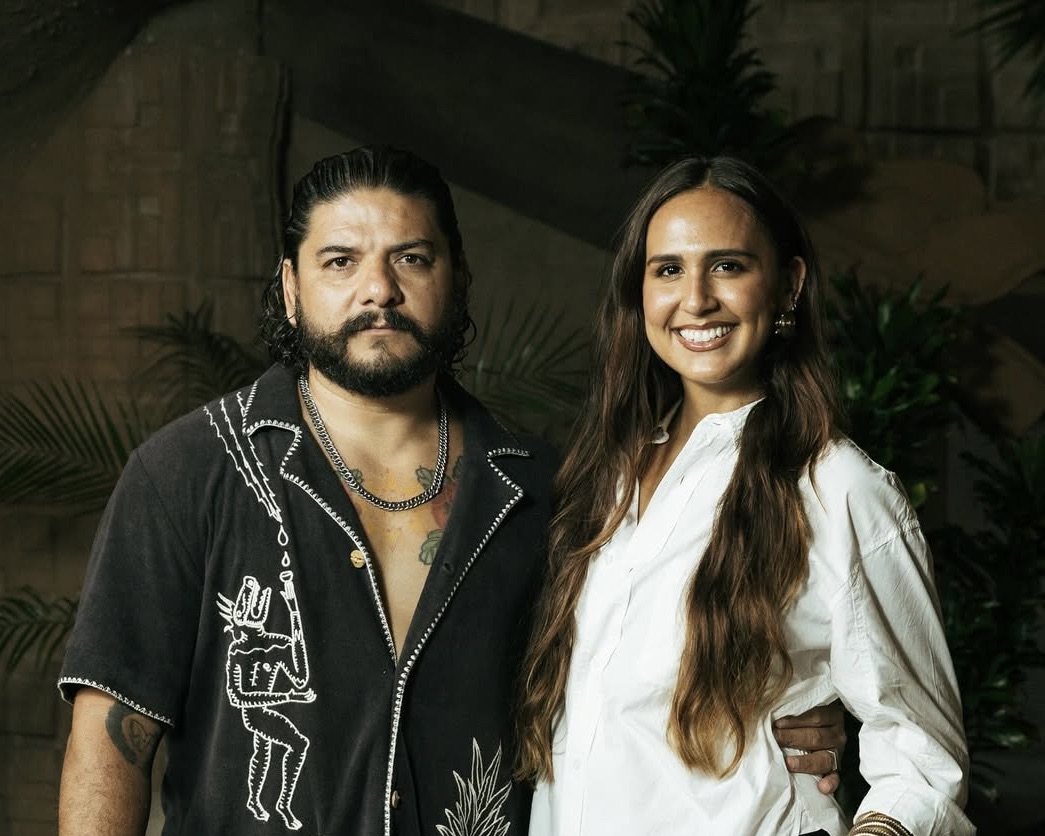
The whole place did a 180 for me after that. The terracotta made sense, the drama of it made sense, all of it made sense. When I got to sit down with Álvaro, the man behind all of it, he told me that was exactly the point. He didn't build a restaurant. He built a temple, a temple of flavor, of cumbia, and everything that is Mexican.
"And basically with my wife, Cassandra, we created this temple, as I call it," Álvaro tells me. "It's a temple of the flavor, and the cumbia, and all the things that are Mexican."
Alvaro Rosales and what he built
Álvaro Rosales Machado is originally from Culiacán, Sinaloa, but spent his whole life going around Mexico before ending up here on Pererenan. He went through Celaya, a small city known for its dulce de leche, or cajeta, then Guadalajara, the city behind everything the world associates with Mexico: the sombrero, the charro, the mariachi, the tequila. He studied tourism, then spent time in Playa del Carmen, Oaxaca, Chiapas, eventually staying in the Caribbean. He started working in hospitality at 17. Bali came in 2015, when he landed at Mexicola Seminyak and spent the next seven years managing it.
"We created a lot together there, the jumping on tables, the dancing, the crazy nights. A great time," he says. "I love the people that work there. Very hard-working, very open to any crazy idea we brought." But after seven years, in 2022, he made a decision. "If I cannot grow here, I will find partners and open my own."
He found partners quickly, his wife Cassandra, two local partners, and one family partner. The land was empty when he found it. The landlord, a local Balinese, told him he was just going to build the structure and the rooftop, whatever Álvaro wanted to do after that was up to him. "So I started moving around, found the partners, and in eight months, I built this," he says. "We built all of 2023, and we opened February 2024."
Traditional, not authentic
The building Álvaro built is a layering of two Mexicos at once. The colonial architecture, the arched shapes, the terracotta, the grandeur, is a direct echo of the period when the Spanish came and left their mark on every city square across the country. But underneath that, running through every corner of the space, are the pre-Hispanic roots he is equally proud of. The lamps are recreated from Mayan references. The corn sits in terracotta bowls along the kitchen counter and the bar. "That is one of the most symbolic things in Mexico, the corn," he says.
"Similar to Indonesia, no nasi, no power. In Mexico, we say, without corn, there's no country."
This distinction between colonial Mexico and pre-Hispanic Mexico isn't in just decoration, it's the whole philosophy. Which is also why Álvaro refuses one specific word when describing his restaurant.
"That's why I never say that Origen is authentic. I say that Origen is traditional. Because we're based on the traditions that create the food of Mexico."
To him, "authentic" has become a word emptied of meaning. "When people say that they sell authentic Mexican food in Bali, I doubt it a little bit, because being from Mexico, I go there and I see flour tortilla and crunchy tacos and I'm like, okay."
Traditional, on the other hand, is something you can hold to. It means basing everything on family recipes, his, Cassandra's, the chef's family. It means that 90% of his ingredients come from local Indonesian farmers, including chiles grown specifically for Origen: serrano, habanero, guajillo. The corn flour still comes from Mexico, because Indonesian corn breaks when you try to make a tortilla from it. "The formula that we use in Origen is a mix of the Mexican with a lot of the Indonesian, an 80-20 formula, plus a secret ingredient."
"Love?" I teased.
"A lot of love."
And the name itself carries all of this. Origen. Origin. Asal, in Indonesian. "It means basically the root, the origin of where it comes from, that is Mexico."
A food trip around Mexico
The menu at Origen is not just a list of dishes, it's a map. Literally. First-time guests get handed a map of Mexico alongside their menu, a concept Álvaro trademarked as the Mexico Food Trip. The idea is simple: instead of eating tacos and going home thinking that's what Mexican food is, you eat your way around the country's 32 states, every time you come, or, all in one sitting.
"We have the carne asada from Monterrey, the ceviche from Sinaloa, the enchiladas from San Luis Potosí, tequila from Jalisco, Oaxaca mezcal, mole, cochinita pibil," he says. Each dish is from somewhere specific, cooked the way it would be cooked there.
"In Mexico we have 32 states. Like here in Indonesia you have 17,000 islands. Every state has many, many different villages and many, many different ways to cook."
The reason this matters, Álvaro explains, is because most people in Bali arrive at a Mexican restaurant with the wrong reference point entirely. "Probably 90% of the people in Bali think that Mexican food is nachos and burritos, and it's not. In Mexico we don't eat nachos, we don't eat burritos, we don't eat fajitas. That's something that people from the United States have created." What Origen offers instead, the pipian, the camarones al mojo, the cochinita pibil, might be unfamiliar on first encounter. But he's confident about what happens after. "Once you try, you will never go back to nachos and burritos."
The recipes behind every dish go back at least three, sometimes four generations. His grandmother gave him the recipe for the chilorio. Cassandra's grandmother gave them the salsa fresca. "Me and my wife, we're not chefs, but we're really, really good guinea pigs," he laughs.
"If the chef put a plate in front of us and it doesn't taste like the family recipe, we were always rejecting it. Until we have the flavor of the family, then we approve and we put it in the menu. So that's why the food here doesn't just taste like Mexican food, it tastes like family recipe, it tastes like tradition, it tastes like home."
This year, a new chapter opens. Álvaro brought in Alfonso Rodriguez, a chef from Mexico well known in the world of fermentation, to start building a new layer of the menu. "He's just jumping in this year to create a new way of delivering Mexico to the guests."
View on Instagram
Mezcal and the upstairs chamber
If the restaurant downstairs is the colonial heart of the temple, then what lives upstairs is the ancient one. Ascend the stone spiral staircase and you enter Casa Mezcal, an air-conditioned sanctuary with Aztec-inspired interiors, arched pillars encircling a speckled jade dance floor. At the center of that floor is a mosaic of the Feathered Serpent, Quetzalcóatl, the same figure on Origen's logo downstairs. On the ceiling sits the Stone of the Sun.
View on Instagram
Origen also holds the largest mezcal menu on the island. Which makes sense, because mezcal is not just a drink to Álvaro, it's another form of education.
"Many people don't know, but tequila is a variety of mezcal," he starts.
"Mezcal is any distillation from agave plant. But one of the most famous mezcals in the world is tequila, because it's made only from blue Weber agave. So tequila is a mezcal, but mezcal is not tequila."
Indonesia currently has around 13 varieties of agave available. Origen stocks all 13.
The way he talks about mezcal mirrors the way he talks about his food, through the lens of purity and process. Ancestral mezcal never touches metal. It ferments in pots of clay. No ethanol, no added sugars. "You're drinking something very, very earthy, very pure," he says.
"That's why people that drink mezcal live 120 years in Oaxaca."
The comparison he keeps reaching for is wine. "Every wine connoisseur checks the year of the harvest, the region. For mezcal, it's the same, you need to check when it was made, who made it, what family made it, the terrain." He says sommeliers are increasingly making the switch. "They know that mezcal is even more pure."
The margaritas, on the other hand, follow a different philosophy entirely, one of deliberate anti-pretension. "We don't have the skinny glass, the cut ice. Many restaurants here, they try to give you the margarita in a refined way. But a margarita just needs to be strong, sharp, and a good taste. Very classic. Very traditional way to do margaritas." They currently have around 10 flavors.
View on Instagram
Building a community in Pererenan
When asked about community, Álvaro recalls the first mezcal event he threw at Origen, he fully braced himself for an empty room. Instead, it was packed. People who love mezcal, people who produce mezcal, owners of mezcal brands who aren't even from Mexico. "That kind of community just pops up in the moment that you do things correctly, in the moment that you give them a space," he says.
But the community Álvaro is building isn't just for Mexicans or Latinos. "The more that we can expose what it is to be Mexicano or Latino, the better. Origen welcomes every single person." He's intentional about not pushing Pererenan into becoming a party strip.
"I'm not pushing crazy parties upstairs. What I try to create is an event where it doesn't matter if you're Latino or not, you can come, enjoy the food, the drinks, the music, the ambience. And then if you feel like a little cha-cha, you can go upstairs and dance. That's it."
Pererenan's character shapes this approach. Unlike Canggu, which runs on tourist traffic, Pererenan is a neighborhood where people actually live. "Pererenan is very united, a lot of families, a lot of young people that are living around here." As Álvaro puts it, "People love to live here." And that changes what a venue needs to be.
He's also watching the neighborhood change in real time as a business owner. "I think in the next five years, Pererenan is not going to have any empty land." A shopping mall is coming near the beach. A big hotel and restaurant is on the way. "Pererenan is now being called the wealthiest section of Bali, so it's getting interest from bigger players."
His belief is that the smaller places will only survive if they've built something bigger players can't replicate. "The small places that are going to survive are the ones that have the community." And community, to him, isn't just about events.
"It's not just to be okay with the community, it's to be community yourself. That's what I say to all my team: every time you get out of here, you're still being Origen."
The temple, and the chapels to come
Two years in, the honeymoon period has settled into something more solid. About 70% of Origen's guests are tourists, and the ones who stay in Pererenan for longer tend to come back two or three times a week. Mexicans visiting tell him it's the best Mexican food they've had in Asia. "It's what keeps me going," he says.
And the temple has plans to multiply. "This is the temple and I'm going to build many chapels," he says.
"This is the cathedral and the Mecca of Mexican food. And then I'm going to start bringing little Origens around. That's the future."
At its core, Origen is a project rooted in the same thing that pushed Álvaro into hospitality at 16 years old behind a bar in Oaxaca, the belief that restaurants and bars are where culture actually gets passed on. "The only way that the world can be safe is if people like in restaurants and bars are creating the culture with the people that visit and with the people that work." Like he says in Mexico: the education starts in the family. It starts at home.
From these extravagant terracotta walls that always grab my attention on Jl. Pantai Pererenan, I left understanding that Álvaro didn't build Origen to impress anyone, he built it because this is what he knows, what his family passed down, and what he genuinely believes the world needs more of. A place that doesn't compromise. A place that feels like home for many, even when home is thousands of miles away.